

 Send Inquiry
1,3-Dibrompropan .
MOQ : 1 Kilograms
1,3-Dibrompropan . Specification
- Smell
- Characteristic pungent odor
- Refractive Rate
- 1.541
- Structural Formula
- Br-CH2-CH2-CH2-Br
- Boiling point
- 194-195C
- HS Code
- 29033990
- Molecular Formula
- C3H6Br2
- Molecular Weight
- 201.89 g/mol
- Grade
- Industrial Grade
- Purity
- 99%
- Application
- Used as an intermediate in organic synthesis
- Appearance
- Colorless liquid
- CAS No
- 109-64-8
- EINECS No
- 203-686-1
- Other Names
- Trimethylene dibromide
- Usage
- Chemical intermediate flame retardant precursor
- Melting Point
- -57C
- Density
- 2.084 Gram per cubic centimeter(g/cm3)
- Solubility
- Slightly soluble in water soluble in ethanol and ether
- Raw Material
- Bromine and propylene derivatives
1,3-Dibrompropan . Trade Information
- Minimum Order Quantity
- 1 Kilograms
- Supply Ability
- 100 Kilograms Per Month
- Delivery Time
- 7 Days
- Main Export Market(s)
- Asia, Australia, Central America, North America, South America, Eastern Europe, Western Europe, Middle East, Africa
1,3-Dibrompropan . About
CAS NO :109-64-8
Linear Formula CH2BrCH2CH2Br;
Synonyms :
Dibromopropane;
1,3-dibromo-propan;
1,3-Dibrompropan;
1,3-Propylenebromide;
Dibromo-1,3 propane;
omega,omega-dibromopropane
Key Features and Properties
1,3-Dibromopropane offers high chemical stability and excellent purity (99%), making it ideal for industrial processes. As a dense (2.084 g/cm3), colorless liquid, it displays a distinctive pungent aroma. Its structural formula, Br-CH2-CH2-CH2-Br, reflects its role as a valuable halogenated compound in a variety of chemical syntheses. The compound is particularly suited for use in fields requiring flame retardant materials and other specialty chemicals.
Applications in Chemical Synthesis
Widely utilized as an intermediate, 1,3-Dibromopropane plays a crucial role in the creation of diverse organic compounds. It is instrumental in synthesizing flame retardants and speciality materials, benefiting from its compatibility with various solvents such as ethanol and ether. Its high degree of purity and specific chemical characteristics enable reliable, scalable results in both large-scale industrial and laboratory environments.
FAQ's of 1,3-Dibrompropan:
Q: How is 1,3-Dibromopropane produced?
A: 1,3-Dibromopropane is typically synthesized by reacting propylene derivatives with bromine under controlled conditions. This process ensures a high purity product suitable for industrial applications.Q: What are the main uses of 1,3-Dibromopropane in industry?
A: It is primarily used as an intermediate in organic synthesis, especially for producing flame retardant precursors. It also finds utility in the manufacture of specialty chemicals and other halogenated compounds.Q: When should 1,3-Dibromopropane be used in synthesis processes?
A: It should be employed when a dibrominated intermediate is needed for further chemical transformation, particularly in the production of flame retardant materials or complex organic substances.Q: Where is 1,3-Dibromopropane commonly supplied from?
A: This chemical is manufactured and exported by various suppliers, with significant production occurring in India. It is readily available through both manufacturers and chemical distributors.Q: What is the process for safely handling and storing 1,3-Dibromopropane?
A: Due to its pungent odor and halogenated nature, it should be handled with proper protective equipment in well-ventilated areas, stored in tightly sealed containers away from heat and moisture.Q: How does 1,3-Dibromopropane benefit chemical manufacturing?
A: Its high purity and reactivity as a dibrominated compound make it a dependable intermediate, helping manufacturers efficiently synthesize desired end products such as flame retardants.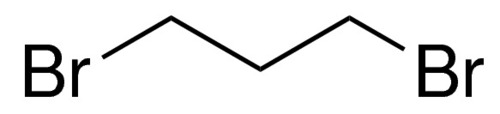
Tell us about your requirement

Price:
Quantity
Select Unit
- 50
- 100
- 200
- 250
- 500
- 1000+
Additional detail
Mobile number
Email

More Products in Aliphatic Bromide Category
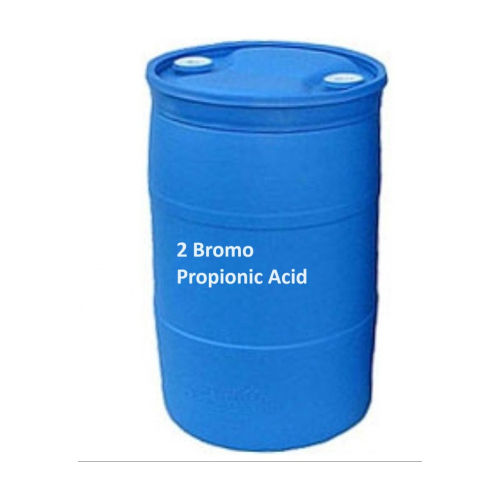
Bromo Propionic Acid
Minimum Order Quantity : 1 Kilograms
Grade : Other, Industrial, Laboratory
Melting Point : 6 C
Appearance : Clear to pale yellow liquid
Density : 1.6 Gram per cubic centimeter(g/cm3)
Molecular Formula : C3H5BrO2
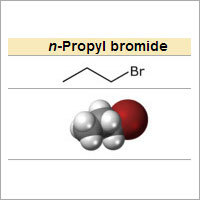
N - Propyl Bromide
Minimum Order Quantity : 1 Kilograms
Grade : Other, Industrial
Melting Point : 112C
Appearance : Colorless liquid
Density : 1.352 Gram per cubic centimeter(g/cm3)
Molecular Formula : C3H7Br
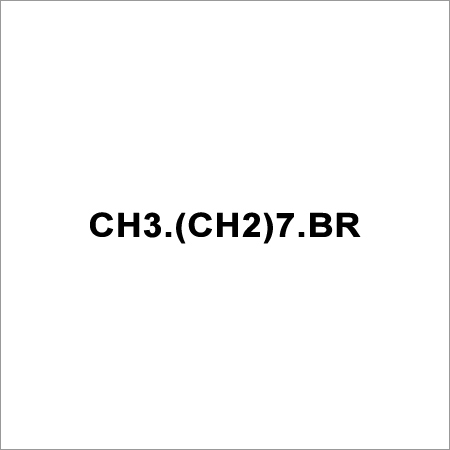
n-Octyl Bromide
Minimum Order Quantity : 1 Kilograms
Grade : Other, Industrial / Laboratory
Melting Point : 62C
Appearance : Colorless to pale yellow liquid
Density : 1.199 Gram per cubic centimeter(g/cm3)
Molecular Formula : C8H17Br
1,2,3 Tribromopropane
Minimum Order Quantity : 1 Kilograms
Grade : Other, Laboratory/Industrial Grade
Melting Point : 4 C
Appearance : Colorless to pale yellow liquid
Density : 2.48 Gram per cubic centimeter(g/cm3)
Molecular Formula : C3H5Br3

Contact us

- Unit 1 :W-6, M.I.D.C., Chemical Zone, Ambernath (W), Ambernath - 421501, Maharashtra, India
- Phone : 08045479213
SONTARA ORGANO INDUSTRIES
GST : 27AAKFS5792F1ZP

- Mr. Mukesh B. Parekh (Partner)
- Mobile : 08045479213
- Send Inquiry
 Send Inquiry
 Send Inquiry
 Send SMS
 Call Me Free
SONTARA ORGANO INDUSTRIES
All Rights Reserved.(Terms of Use)
Developed and Managed by Infocom Network Private Limited.
Developed and Managed by Infocom Network Private Limited.


 English
 Spanish
 French
 German
 Italian
 Chinese (Simplified)
 Japanese
 Korean
 Arabic
 Portuguese