

 Send Inquiry
Isobutyl Bromide
MOQ : 1 Kilograms
Isobutyl Bromide Specification
- Refractive Rate
- 1.436-1.438
- HS Code
- 29039090
- Boiling point
- 90-92 C
- Smell
- Irritating, characteristic odor
- Molecular Formula
- C4H9Br
- Structural Formula
- CH3CH2CH(Br)CH3
- Molecular Weight
- 137.02 g/mol
- Classification
- Alkyl Halide (Organic)
- Grade
- Technical/Industrial
- Purity
- 98% min
- Application
- Intermediate in organic synthesis, pharmaceuticals, agrochemicals
- Appearance
- Colorless to pale yellow liquid
- CAS No
- 78-77-3
- EINECS No
- 201-205-7
- Other Names
- 1-Bromoisobutane, Isobutyl bromide, tert-Butyl bromide
- Usage
- Organic synthesis, pharmaceutical intermediate, laboratory reagent
- Melting Point
- -119 C
- Density
- 1.26 Gram per cubic centimeter(g/cm3)
- Solubility
- Insoluble in water, soluble in ether and alcohol
- Raw Material
- Isobutanol
- Stability
- Stable under normal temperatures and pressures
- Sensitivity
- Light sensitive
- Storage
- Store in a cool, dry, ventilated area away from heat and ignition sources
- Packaging
- In glass bottles or HDPE containers, inert atmosphere recommended
- UN Number
- 2345 (for transport)
- Flash Point
- 11 C (closed cup)
- Hazard Class
- Hazardous, irritant, harmful if swallowed
Isobutyl Bromide Trade Information
- Minimum Order Quantity
- 1 Kilograms
- Supply Ability
- 100 Kilograms Per Month
- Delivery Time
- 7 Days
- Sample Available
- No
- Main Export Market(s)
- Asia, Australia, Central America, North America, South America, Eastern Europe, Western Europe, Middle East, Africa
Isobutyl Bromide About
| Name of Product | Isobutyl Bromide |
| 1-Bromo-2-methylpropane | |
| CAS No | 78-77-3 |
| Formula | (CH3)2CHCH2Br |
| IUPAC Name | 1-bromo-2-methylpropane |
| InChI | InChI=1S/C4H9Br/c1-4(2)3-5/h4H,3H2,1-2H3 |
| InChI Key | HLVFKOKELQSXIQ-UHFFFAOYSA-N |
| Canonical SMILES | CC(C)CBr |
| EC Number | 201-141-2 |
| UN Number | 2342 |
| UNII | 5OEC0BW987 |
| Description | Clear, colourless to pale yellow liquid |
| Water | Not more than 0.1 % |
| Acidity | Not more than 0.1 % as HBr |
| Purity by GC | Not less than 99.0% |
| Other name / synonyms | 1-Bromo-2-methylpropane |
| ISOBUTYL BROMIDE | |
| iso-Butyl bromide | |
| 78-77-3 | |
| Propane, 1-bromo-2-methyl- | |
| Bromoisobutane | |
| i-Butyl bromide | |
| 1-Bromo-2-methyl-propane | |
| UNII-5OEC0BW987 | |
| CCRIS 349 | |
| HLVFKOKELQSXIQ-UHFFFAOYSA-N | |
| NSC 8416 | |
| EINECS 201-141-2 | |
| AI3-18130 | |
| isobutylbromide | |
| i-butylbromide | |
| iso-butylbromide | |
| isobutyl-bromide | |
| 2-methylbromopropane | |
| sJPHAbIKUP@ | |
| 2-methylpropylbromide | |
| iso-C4H9Br | |
| 2-methyl bromopropane | |
| 2-methylpropyl bromide | |
| BrCH2CHMe2; | |
| ACMC-1BLAD | |
| l-bromo-2-methylpropane | |
| 2-methyl-1-bromopropane | |
| 3-bromo-2-methylpropane | |
| AC1L1MSG | |
| 1 -bromo-2-methylpropane | |
| 1-bromo-2-methyl propane | |
| AC1Q27JY | |
| SCHEMBL7399 | |
| DSSTox_CID_31112 | |
| DSSTox_GSID_52539 | |
| KSC377A7R | |
| 156582_ALDRICH | |
| 5OEC0BW987 | |
| AC1Q1P25 | |
| CHEMBL346532 | |
| 58510_FLUKA | |
| CTK2H7078 | |
| WLN: E1Y1&1 | |
| NSC8416 | |
| MolPort-001-779-904 | |
| BB_SC-6824 | |
| NSC-8416 | |
| Tox21_303878 | |
| ANW-37218 | |
| AR-1C1952 | |
| SBB059932 | |
| STL264117 | |
| ZINC01586727 | |
| AKOS000118762 | |
| EBD2638203 | |
| MCULE-6039420480 | |
| RP20323 | |
| RTC-030984 | |
| TRA0041920 | |
| UN 2342 | |
| CAS-78-77-3 | |
| NCGC00357138-01 | |
| AN-23958 | |
| CJ-25284 | |
| KB-64977 | |
| LS-119649 | |
| TC-030984 | |
| A9430 | |
| B0616 | |
| FT-0085081 | |
| FT-0607463 | |
| FT-0627385 | |
| ST51046199 | |
| 3B4-0628 | |
| I14-0216 | |
| I14-108090 | |
| InChI=1/C4H9Br/c1-4(2)3-5/h4H,3H2,1-2H |
Key Applications and Uses
Isobutyl Bromide is widely utilized as a versatile intermediate in organic synthesis, enabling the production of pharmaceuticals and agrochemicals. Its reactivity makes it an essential laboratory reagent for various chemical transformations. The substance's solubility in organic solvents like ether and alcohol, coupled with insolubility in water, enhances its utility across numerous synthetic processes.
Safe Storage and Handling Guidelines
To ensure safety, Isobutyl Bromide must be stored in cool, dry, and well-ventilated spaces, protected from heat, light, and ignition sources. Utilizing inert atmospheres and appropriate containers-either glass bottles or HDPE-is crucial as the compound is sensitive to light and has a low flash point. This careful handling helps maintain product stability and reduce hazard risks.
FAQ's of Isobutyl Bromide:
Q: How should Isobutyl Bromide be stored to maintain its stability?
A: Isobutyl Bromide should be kept in a cool, dry, and well-ventilated area away from any heat or ignition sources. It is sensitive to light, so it is advisable to store it in glass bottles or HDPE containers under an inert atmosphere to preserve its stability and prevent degradation.Q: What is the primary usage of Isobutyl Bromide in industry?
A: Isobutyl Bromide serves as an intermediate in organic synthesis, particularly for the manufacture of pharmaceuticals, agrochemicals, and as a laboratory reagent. Its chemical properties make it an essential building block in a variety of synthetic processes.Q: When should special precautions be taken during the handling of Isobutyl Bromide?
A: Extra precautions should always be observed due to its low flash point (11C), hazardous classification, and irritating odor. Personal protective equipment should be worn during handling, and direct contact, inhalation, or ingestion should be avoided.Q: Where is Isobutyl Bromide typically applied or processed?
A: Isobutyl Bromide is most commonly used in chemical manufacturing plants, pharmaceutical production facilities, and research laboratories. It is employed wherever synthesis of alkylated compounds or pharmaceutical intermediates is required.Q: What is the process for safely transferring Isobutyl Bromide?
A: During transfer, Isobutyl Bromide should be handled in an inert atmosphere to minimize exposure to air and light. The process should take place in well-ventilated areas using equipment that is compatible with alkyl halides and designed to prevent spills and ignition.Q: How does Isobutyl Bromide benefit organic synthesis?
A: Isobutyl Bromide acts as a valuable alkylating agent, enabling the introduction of the isobutyl group into organic molecules. This utility is crucial in the synthesis of various compounds, enhancing the efficiency and scope of chemical manufacturing.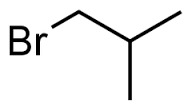
Tell us about your requirement

Price:
Quantity
Select Unit
- 50
- 100
- 200
- 250
- 500
- 1000+
Additional detail
Mobile number
Email

More Products in Aliphatic Bromide Category
Hydrobromic acid (33% in acetic acid)
Minimum Order Quantity : 1 Kilograms
Usage : Used as a brominating agent in organic reactions; pharmaceutical intermediate
Appearance : Clear colorless to pale yellow solution
Boiling point : Varies due to mixture; HBr 122C, AcOH 118C
HS Code : 28111990
Refractive Rate : ~1.39 at 20C
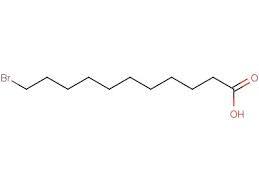
11 Bromoundecanoic Acid
Minimum Order Quantity : 1 Kilograms
Usage : Specialty chemical manufacturing, lab reagent, research
Appearance : White to offwhite crystalline solid
Boiling point : Not available (decomposes)
HS Code : 29159090
Refractive Rate : Not determined
N- Hexyl Bromide
Minimum Order Quantity : 1 Kilograms
Usage : Used as an intermediate in organic synthesis and pharmaceuticals
Appearance : Clear, colorless to pale yellow liquid
Boiling point : 155157 C
HS Code : 2903 30 90
Refractive Rate : 1.4451.447 (20C)

Methyl - 3 - Oxopentanoate
Minimum Order Quantity : 1 Kilograms
Usage : Used in the preparation of pharmaceuticals, agrochemicals, and dyes
Appearance : Colorless to light yellow liquid
Boiling point : 169170C
HS Code : 29183000
Refractive Rate : n20/D 1.418

Contact us

- Unit 1 :W-6, M.I.D.C., Chemical Zone, Ambernath (W), Ambernath - 421501, Maharashtra, India
- Phone : 08045479213
SONTARA ORGANO INDUSTRIES
GST : 27AAKFS5792F1ZP

- Mr. Mukesh B. Parekh (Partner)
- Mobile : 08045479213
- Send Inquiry
 Send Inquiry
 Send Inquiry
 Send SMS
SONTARA ORGANO INDUSTRIES
All Rights Reserved.(Terms of Use)
Developed and Managed by Infocom Network Private Limited.
Developed and Managed by Infocom Network Private Limited.


 English
 Spanish
 French
 German
 Italian
 Chinese (Simplified)
 Japanese
 Korean
 Arabic
 Portuguese