

 Send Inquiry
Lithium Sulphate 10377-48-7
MOQ : 25 Kilograms
Lithium Sulphate 10377-48-7 Specification
- Molecular Formula
- Li2SO4
- Form
- Powder
- Storage
- Room Temperature
- Solubility
- Water
- Purity
- 99%
- CAS No
- 10377-48-7
- EINECS No
- 233-820-4
- Grade
- Industrial Grade
Lithium Sulphate 10377-48-7 Trade Information
- Minimum Order Quantity
- 25 Kilograms
- Supply Ability
- 100 Kilograms Per Month
- Delivery Time
- 7 Days
- Main Export Market(s)
- Asia, Australia, Central America, North America, South America, Eastern Europe, Western Europe, Middle East, Africa
Lithium Sulphate 10377-48-7 About
| Name of Product | Lithium Sulphate |
| CAS No | 10377-48-7 |
| Formula | Li2SO4 |
| IUPAC Name | dilithium;sulfate |
| InChI | InChI=1S/2Li.H2O4S/c;;1-5(2,3)4/h;;(H2,1,2,3,4)/q2*+1;/p-2 |
| InChI Key | INHCSSUBVCNVSK-UHFFFAOYSA-L |
| Canonical SMILES | [Li+].[Li+].[O-]S(=O)(=O)[O-] |
| EC Number | 233-820-4 |
| UNII | 919XA137JK |
| Wikipedia | Lithium sulfate |
| Description | White to off-white crystalline powder |
| Assay | NLT 99.0 |
| Other name / synonyms | Lithium sulfate |
| Lithium sulphate | |
| 10377-48-7 | |
| Lithiophor | |
| Dilthium sulfate | |
| dilithium sulfate | |
| Li2SO4 | |
| Lithium sulfate (2:1) | |
| Sulfuric acid, lithium salt (1:2) | |
| Sulfuric acid, dilithium salt | |
| UNII-919XA137JK | |
| CHEBI:53474 | |
| LITHIUM SULFATE, ANHYDROUS | |
| EINECS 233-820-4 | |
| Lithium sulfate solution | |
| AI3-04469 | |
| diLithoTab sulfate | |
| Lithionit (TN) | |
| ACMC-20akmc | |
| Epitope ID:158531 | |
| dilithium(1+) ion sulfate | |
| L6375_ALDRICH | |
| DSSTox_CID_28472 | |
| DSSTox_RID_83276 | |
| DSSTox_GSID_49201 | |
| KSC492Q4N | |
| 62613_ALDRICH | |
| L6375_SIGMA | |
| 203653_ALDRICH | |
| 62613_FLUKA | |
| 82348_FLUKA | |
| 82348_SIGMA | |
| CTK3J2846 | |
| INHCSSUBVCNVSK-UHFFFAOYSA-L | |
| MolPort-003-927-649 | |
| 919XA137JK | |
| AC1L2543 | |
| Tox21_202799 | |
| AKOS025243176 | |
| TRA0085779 | |
| NCGC00260345-01 |
Industrial Versatility and Purity
Lithium Sulphate stands out for its high purity (99%) and versatility within multiple industrial sectors. Its consistent quality makes it a preferred choice among manufacturers and researchers seeking reliable reagents for battery production, ceramics, and glass industries. The compound's stable, odorless, and slightly salty-bitter characteristics further contribute to its adaptability for specialized applications.
Solubility and Physical Characteristics
Presented as a white crystalline powder, Lithium Sulphate offers solubility in water, facilitating its use in chemical reactions and production processes. With a melting point of 860C and a density of 2.22 g/cm3, it is suitable for high-temperature industrial operations and chemical syntheses, enhancing its usability for manufacturers and laboratories.
FAQ's of Lithium Sulphate 10377-48-7:
Q: How is Lithium Sulphate (CAS No: 10377-48-7) manufactured?
A: Lithium Sulphate is produced by reacting lithium hydroxide with sulfuric acid. This process results in a highly pure, industrial-grade compound that appears as a white crystalline powder and is suitable for various applications.Q: What are the main uses and benefits of Lithium Sulphate?
A: Lithium Sulphate is primarily used in battery manufacturing, as a laboratory reagent, and in the production of ceramics and glass. Its benefits include high purity, consistent quality, solubility in water, and reliable performance in industrial processes and chemical syntheses.Q: Where is Lithium Sulphate commonly applied in the industry?
A: This compound is extensively used in the battery sector, glass and ceramics manufacturing, as well as in electrochemical applications and laboratory research. Its solubility and stability make it valuable in these fields, particularly in India where it is exported, manufactured, and supplied.Q: When should Lithium Sulphate be used in a laboratory setting?
A: Lithium Sulphate is used in laboratory research and analysis when a soluble, stable sulphate source is required. Its high purity and predictable behavior make it suitable for chemical synthesis, analytical chemistry, and electrochemical experiments.Q: What is the process for utilizing Lithium Sulphate in battery production?
A: In battery manufacturing, Lithium Sulphate is integrated during the preparation of electrode materials. Its reliable purity and physical properties enable precise formulation, enhancing the performance and longevity of battery cells.Q: How does the solubility of Lithium Sulphate affect its industrial use?
A: Solubility in water allows Lithium Sulphate to be easily incorporated into various chemical processes, promoting efficient reactions and homogeneous mixtures in glass, ceramic, and synthesis applications.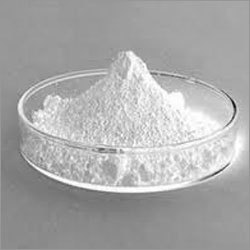
Tell us about your requirement

Price:
Quantity
Select Unit
- 50
- 100
- 200
- 250
- 500
- 1000+
Additional detail
Mobile number
Email

More Products in Lithium Compounds Category

Lithium Bromide Solution 55% Molybdate Base
Minimum Order Quantity : 25 Kilograms
EINECS No : 2324204
Smell : Other, Odorless
Taste : Other , Saline
HS Code : 28275990
Usage : Used as an absorbent in absorption chillers
Lithium Chloride Solution 40%
Minimum Order Quantity : 25 Kilograms
EINECS No : 2312123
Smell : Other, Odorless
Taste : Other , Saline
HS Code : 28252000
Usage : Laboratory reagent, industrial manufacturing, specialty chemicals

Lithium Sulphate Li2SO4
Minimum Order Quantity : 25 Kilograms
EINECS No : 2318209
Smell : Other, Odorless
Taste : Other , Slightly salty
HS Code : 2833 29 90
Usage : Industrial and laboratory
Anhydrous Lithium Bromide Powder
Minimum Order Quantity : 25 Kilograms
EINECS No : 2314398
Smell : Other, Odorless
Taste : Other , Saline
HS Code : 28275990
Usage : Industrial and laboratory

Contact us

- Unit 1 :W-6, M.I.D.C., Chemical Zone, Ambernath (W), Ambernath - 421501, Maharashtra, India
- Phone : 08045479213
SONTARA ORGANO INDUSTRIES
GST : 27AAKFS5792F1ZP

- Mr. Mukesh B. Parekh (Partner)
- Mobile : 08045479213
- Send Inquiry
 Send Inquiry
 Send Inquiry
 Send SMS
 Call Me Free
SONTARA ORGANO INDUSTRIES
All Rights Reserved.(Terms of Use)
Developed and Managed by Infocom Network Private Limited.
Developed and Managed by Infocom Network Private Limited.


 English
 Spanish
 French
 German
 Italian
 Chinese (Simplified)
 Japanese
 Korean
 Arabic
 Portuguese