

 Send Inquiry
Lithium Nitrate
Lithium Nitrate Specification
- Density
- 2.38 Gram per cubic centimeter(g/cm3)
- Molecular Weight
- 68.95 g/mol
- Shape
- Crystalline / Granular
- Boiling point
- 600C (decomposes)
- Purity
- 99% Min
- Taste
- Saline
- Storage
- Keep container tightly closed in a dry and well-ventilated place
- Poisonous
- Yes
- Molecular Formula
- LiNO3
- HS Code
- 28342990
- Ph Level
- ~7 (in 5% solution)
- Smell
- Odorless
- Solubility
- Soluble in water, alcohol, pyridine and liquid ammonia
- Form
- Solid
- Structural Formula
- LiNO3
- Melting Point
- 264C
- Other Names
- Nitric acid, lithium salt
- Classification
- Inorganic Nitrate Salt
- Chemical Name
- Lithium Nitrate
- CAS No
- 7790-69-4
- EINECS No
- 231-550-4
- Grade
- Industrial/Laboratory Grade
- Standard
- Complies with industry standards
- Type
- Inorganic Salt
- Usage
- Industrial, laboratory, pyrotechnics
- Main Material
- Lithium Nitrate
- UN Number
- 2722
- Corrosivity
- Can be corrosive to metals in presence of moisture
- Appearance
- Colorless to white crystalline solid
- Shelf Life
- 2 years from date of manufacture if stored properly
- Hazard Class
- 5.1 (Oxidizing agent)
- Packaging
- 25 kg HDPE drums or bags
- Solubility in Water at 20C
- 45 g/100 ml
- Decomposition Temperature
- >600C (releases NOx gases)
- Compatibility
- Incompatible with strong reducing agents, acids, and organic materials
- Stability
- Stable under normal conditions; hygroscopic
Lithium Nitrate Trade Information
- Supply Ability
- 100 Per Month
- Delivery Time
- 7 Days
About Lithium Nitrate
| Name of Product | Lithium Nitrate |
| CAS No | 7790-69-4 |
| Formula | LiNO3 |
| IUPAC Name | lithium;nitrate |
| InChI | InChI=1S/Li.NO3/c;2-1(3)4/q+1;-1 |
| InChI Key | IIPYXGDZVMZOAP-UHFFFAOYSA-N |
| Canonical SMILES | [Li+].[N+](=O)([O-])[O-] |
| CAS | 7790-69-4 |
| EC Number | 232-218-9 |
| UN Number | 2722 |
| Other name / synonyms | Lithium nitrate |
| 7790-69-4 | |
| Lithiumnitrate | |
| LiNO3 | |
| lithium(1+) ion nitronate | |
| KSC492I7J | |
| 229741_ALDRICH | |
| 62574_FLUKA | |
| 62574_SIGMA | |
| CHEBI:63315 | |
| CTK3J2474 | |
| IIPYXGDZVMZOAP-UHFFFAOYSA-N | |
| MolPort-006-118-747 | |
| s202 | |
| 227986_SIAL | |
| ANW-37126 | |
| AKOS015833350 | |
| AKOS015902748 | |
| RTR-037815 | |
| TRA0084565 | |
| IN003146 | |
| IN018964 | |
| LS-193696 | |
| TR-037815 | |
| I14-19770 |
Versatile Industrial Applications
LiNO3 is utilized across various industries, most notably in pyrotechnics for red flame production, glass and ceramic manufacturing, and as a catalyst in chemical synthesis. Its ability to function as an oxidizing agent makes it essential for rocket propellants and heat-exchange salts, contributing to advanced industrial processes and product efficiency.
Safe Handling and Storage
Since Lithium Nitrate is hygroscopic and can be corrosive to metals in moisture, it should be stored in tightly closed containers within dry, well-ventilated areas. Proper storage extends its shelf life and preserves product integrity. Avoiding incompatible substances such as reducing agents, acids, and organic materials is crucial for safety.
FAQs of Lithium Nitrate:
Q: How should Lithium Nitrate be stored to ensure safety and maintain quality?
A: Lithium Nitrate should be kept in tightly sealed containers, placed in a dry and well-ventilated environment, away from moisture, incompatible substances (like strong reducing agents, acids, and organics), and heat sources. Proper storage helps prevent degradation and corrosion, maintaining its two-year shelf life.Q: What is the process for using Lithium Nitrate in industrial applications?
A: In industries, Lithium Nitrate is typically incorporated as a catalyst, oxidizer, or additive, depending on the product being manufactured. Its high solubility allows for uniform mixing in solutions for pyrotechnics, ceramics, and glass production, while also supporting heat transfer processes in heat-exchange systems.Q: When is Lithium Nitrate most beneficial in a manufacturing process?
A: Lithium Nitrate is particularly advantageous when strong oxidizing properties or high solubility in water are required. Its presence is most beneficial during steps like coloration in fireworks, as a flux in ceramics, or to enhance thermal performance in heat-exchange salt formulations.Q: Where is Lithium Nitrate commonly supplied and used?
A: Lithium Nitrate is predominantly supplied to industries and laboratories in regions like India, delivered by exporters, manufacturers, and suppliers. It is mainly utilized in pyrotechnics, glass and ceramic manufacturing plants, chemical synthesis facilities, and research laboratories.Q: What are the main benefits of using Lithium Nitrate over similar compounds?
A: The strategic benefits of Lithium Nitrate include its high purity (99% minimum), stability, excellent solubility in multiple solvents, and role as a potent oxidizer. These features enable efficient reactions and enhanced product performance in diverse applications, from pyrotechnics to advanced material manufacturing.Q: How does Lithium Nitrate react with other substances?
A: Lithium Nitrate is incompatible with strong reducing agents, acids, and organic materials, which can cause hazardous reactions or decomposition, releasing toxic NOx gases. It acts as an oxidizing agent, so care should be taken to prevent accidental mixing with incompatible chemicals.Q: What precautions should be taken when handling Lithium Nitrate?
A: Protective equipment such as gloves and safety goggles should be used when handling Lithium Nitrate to prevent skin and eye contact. Ensure good ventilation and avoid ingestion or inhalation, as the substance is toxic if ingested and can decompose at high temperatures releasing harmful gases.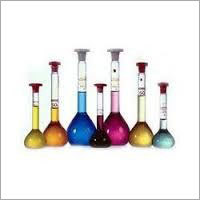
Tell us about your requirement

Price:
Quantity
Select Unit
- 50
- 100
- 200
- 250
- 500
- 1000+
Additional detail
Mobile number
Email

More Products in Lithium Compounds Category
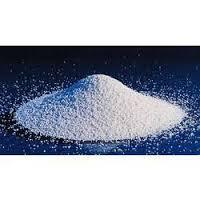
Lithium Chloride 40% solution
Purity : 40% w/w Solution
Taste : Other , Saline
Storage : Other, Store in tightly closed containers, cool and dry place
Molecular Formula : LiCl
HS Code : 2827 39 00
Lithium Chloride Solution 40%
Purity : 40% (w/w)
Taste : Other , Saline
Storage : Other, Store in tightly closed containers, in a cool and dry place
Molecular Formula : LiCl
HS Code : 28252000

Lithium Bromide Solution 55%
Purity : 55% 1%
Taste : Other , Saline
Storage : Other, Store in tightly closed containers, away from moisture
Molecular Formula : LiBr
HS Code : 28275990
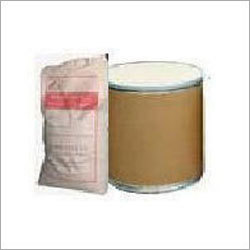
Anhydrous Lithium Chloride Powder
Purity : 99% Min
Taste : Other , Saline
Storage : Other, Store tightly sealed in a cool, dry place, protected from moisture
Molecular Formula : LiCl
HS Code : 28273990

Contact us

- Unit 1 :W-6, M.I.D.C., Chemical Zone, Ambernath (W), Ambernath - 421501, Maharashtra, India
- Phone : 08045479213
SONTARA ORGANO INDUSTRIES
GST : 27AAKFS5792F1ZP

- Mr. Mukesh B. Parekh (Partner)
- Mobile : 08045479213
- Send Inquiry
 Send Inquiry
 Send Inquiry
 Send SMS
SONTARA ORGANO INDUSTRIES
All Rights Reserved.(Terms of Use)
Developed and Managed by Infocom Network Private Limited.
Developed and Managed by Infocom Network Private Limited.


 English
 Spanish
 French
 German
 Italian
 Chinese (Simplified)
 Japanese
 Korean
 Arabic
 Portuguese