

 Send Inquiry
Anhydrous Lithium Chloride Powder
MOQ : 25 Kilograms
Anhydrous Lithium Chloride Powder Specification
- Poisonous
- Yes
- Boiling point
- 1382°C
- Molecular Weight
- 42.39 g/mol
- Melting Point
- 605°C
- Shape
- Powder
- Purity
- 99% Min
- Density
- 2.07 Gram per cubic centimeter(g/cm3)
- Ph Level
- Neutral, approximately 7 at 10% solution
- Molecular Formula
- LiCl
- Structural Formula
- Cl-Li
- Taste
- Saline
- Other Names
- LiCl
- Form
- Solid
- HS Code
- 28273990
- Storage
- Store tightly sealed in a cool, dry place, protected from moisture
- Solubility
- Soluble in water, alcohol, and pyridine
- Smell
- Odorless
- Classification
- Inorganic Salt
- Chemical Name
- Lithium Chloride
- CAS No
- 7447-41-8
- EINECS No
- 231-212-3
- Grade
- Industrial and Laboratory Grade
- Standard
- Conforms to industry standards
- Type
- Anhydrous Salt
- Usage
- Laboratory reagents, chemical synthesis, metallurgy, drying agent
- Main Material
- Lithium Chloride (LiCl)
- Hazard Class
- 6.1 (Toxic substances)
- Test Method
- Analytical grade standard methods
- Appearance
- White crystalline powder
- UN Number
- UN 2806
- Stability
- Stable under recommended storage conditions
- Compatibility
- Incompatible with strong acids, oxidizers, and moisture
- Particle Size
- Fine powder, 100 mesh
- Packing
- Packed in sealed HDPE drums or bags
- Moisture Content
- 0.5%
- Shelf Life
- 2 years if properly stored
Anhydrous Lithium Chloride Powder Trade Information
- Minimum Order Quantity
- 25 Kilograms
- Supply Ability
- 100 Kilograms Per Month
- Delivery Time
- 7 Days
- Main Export Market(s)
- Asia, Australia, Central America, North America, South America, Eastern Europe, Western Europe, Middle East, Africa
About Anhydrous Lithium Chloride Powder
| Name of Product | Lithium Chloride Powder |
| CAS No | 7447-41-8 |
| Formula | LiCl |
| IUPAC Name | lithium;chloride |
| InChI | InChI=1S/ClH.Li/h1H;/q;+1/p-1 |
| InChI Key | KWGKDLIKAYFUFQ-UHFFFAOYSA-MKWGKDLIKAYFUFQ |
| Canonical SMILES | [Li+].[Cl-] |
| CAS | 7447-41-8 |
| EC Number | 231-212-3 |
| ICSC Number | 711 |
| RTECS Number | OJ5950000 |
| UNII | G4962QA067 |
| Wikipedia | Lithium chloride |
| Description | White to off-white crystalline, highly hygroscopic powder |
| Loss on drying | Not more than 2.0 % |
| Assay (on dry basis) | NLT 99.0 % |
| Other name / synonyms | LITHIUM CHLORIDE |
| 7447-41-8 | |
| Lithium chloride (LiCl) | |
| chlorure de lithium | |
| Lithiumchlorid | |
| Lithiumchloride | |
| Chlorku litu | |
| LiCl | |
| chlorolithium | |
| Luthium chloride | |
| Chlorku litu [Polish] | |
| Lithium chloride solution | |
| lithium(1+) ion chloride | |
| Chlorure de lithium [French] | |
| CHEMBL69710 | |
| CCRIS 5924 | |
| UNII-G4962QA067 | |
| CHEBI:48607 | |
| HSDB 4281 | |
| EINECS 231-212-3 | |
| NSC327172 | |
| NSC 327172 | |
| 404596-80-1 | |
| lithii chloridum | |
| Lithium Cholride | |
| cloruro de litio | |
| LithoTab chloride | |
| Lithium chloride,crystal | |
| Lopac-L-4408 | |
| MolMap_000071 | |
| WLN: LI G | |
| AC1L8V4Y | |
| AC1Q1U4K | |
| Lithium Chloride, Anhydrous | |
| Lopac0_000604 | |
| LITHIUM CHLORIDE, ACS | |
| KSC492I6F | |
| L7026_SIGMA | |
| L9650_SIGMA | |
| 203637_ALDRICH | |
| 429457_ALDRICH | |
| 449881_ALDRICH | |
| 667544_ALDRICH | |
| L4408_SIAL | |
| 02685_FLUKA | |
| 62476_FLUKA | |
| 62476_SIGMA | |
| 62478_FLUKA | |
| 62481_FLUKA | |
| 62483_FLUKA | |
| 73036_FLUKA | |
| CTK3J2462 | |
| KWGKDLIKAYFUFQ-UHFFFAOYSA-M | |
| MolPort-000-156-705 | |
| 62478_SIAL | |
| 62481_SIAL | |
| 62483_SIAL | |
| 73036_SIAL | |
| HMS3261J10 | |
| LTBB003327 | |
| 213233_SIAL | |
| 310468_SIAL | |
| ANW-36491 | |
| DNC000879 | |
| AKOS015902822 | |
| AKOS015950647 | |
| AKOS024438070 | |
| CCG-204693 | |
| G4962QA067 | |
| lithium chloride, gamma irradiated, 8m | |
| LP00604 | |
| LS-1644 | |
| NSC-327172 | |
| RTR-024082 | |
| TRA-0189435 | |
| NCGC00015607-01 | |
| NCGC00015607-02 | |
| NCGC00015607-03 | |
| NCGC00015607-04 | |
| NCGC00093980-01 | |
| NCGC00093980-02 | |
| SC-65521 | |
| AB1002933 | |
| KB-297204 | |
| TR-024082 | |
| EU-0100604 | |
| FT-0627896 | |
| L0204 | |
| L0222 | |
| W8215 | |
| LITHIUM CHLORIDE, ANHYDROUS, 99.65% | |
| L 4408 | |
| A838146 | |
| 3B4-1961 | |
| I14-19628 | |
| Lithium atomic spectroscopy standard concentrate 1.00 g Li | |
| 1220508-63-3 | |
| 1309791-76-1 |
High-Purity Powder for Diverse Applications
Our Anhydrous Lithium Chloride Powder is meticulously produced to meet rigorous industry standards. It boasts high purity, stable properties, and versatile compatibility, making it ideal as a flux in aluminum metallurgy, component in air conditioning and drying systems, as well as a key reagent in organic synthesis and lithium metal production. Its fine particle size and consistent quality make it suitable for both industrial and laboratory use.
Safe Handling and Optimal Storage
Ensure maximum shelf life and safety of our Lithium Chloride Powder by storing it tightly sealed in a cool, dry place, protected from moisture and incompatible chemicals like strong acids and oxidizers. Packed in HDPE drums or bags, the product remains stable for two years, supporting reliable performance and usability across multiple sectors.
FAQs of Anhydrous Lithium Chloride Powder:
Q: How should Anhydrous Lithium Chloride Powder be stored to maintain its stability and shelf life?
A: It should be stored tightly sealed in a cool, dry area, away from moisture and incompatible substances such as strong acids and oxidizers to maintain stability and preserve its two-year shelf life.Q: What are the primary uses of Anhydrous Lithium Chloride Powder in industry and laboratories?
A: This powder serves as a flux in aluminum metallurgy, a drying agent in air conditioning and industrial drying systems, a raw material in producing lithium metal, and a reagent in chemical and organic synthesis.Q: When is it necessary to use analytical grade standard methods for testing Lithium Chloride Powder?
A: Analytical grade standard methods should be used whenever precise verification of purity, moisture content, or particle size is requiredtypically in research, synthesis, and quality control processes.Q: Where is Anhydrous Lithium Chloride Powder typically manufactured and supplied from?
A: It is commonly manufactured, exported, and supplied by chemical producers in India, with rigorous industry standards followed for quality assurance.Q: What precautions should be taken when handling Anhydrous Lithium Chloride Powder?
A: Due to its toxic classification (Hazard Class 6.1), it is harmful if ingested and should be handled with appropriate safety measures, including protective equipment and strict avoidance of contact with incompatible materials.Q: How does the fine particle size (100 mesh) benefit industrial and laboratory processes?
A: The fine particle size ensures efficient mixing, reactivity, and dissolution, which enhances its effectiveness in metallurgical fluxes, chemical syntheses, and as a drying agent.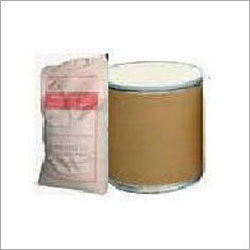
Tell us about your requirement

Price:
Quantity
Select Unit
- 50
- 100
- 200
- 250
- 500
- 1000+
Additional detail
Mobile number
Email

More Products in Lithium Compounds Category
Lithium Chloride Solution 40%
Minimum Order Quantity : 25 Kilograms
Molecular Formula : LiCl
Usage : Laboratory reagent, industrial manufacturing, specialty chemicals
Form : Other, Aqueous Solution
Storage : Other, Store in tightly closed containers, in a cool and dry place
Other Names : LiCl Solution
Lithium Chloride 40% solution
Minimum Order Quantity : 25 Kilograms
Molecular Formula : LiCl
Usage : Industrial and laboratory use
Form : Other, Clear solution
Storage : Other, Store in tightly closed containers, cool and dry place
Other Names : LiCl; Lithium monochloride
Anhydrous Lithium Bromide Powder
Minimum Order Quantity : 25 Kilograms
Molecular Formula : LiBr
Usage : Industrial and laboratory
Form : Powder
Storage : Other, Store in tightly closed container, in a cool, dry, and wellventilated place
Other Names : Lithium Monobromide
Lithium Chromate Solution 20%
Minimum Order Quantity : 25 Kilograms
Molecular Formula : Li2CrO4 (for pure substance)
Usage : Laboratory chemical, industrial applications
Form : Liquid
Storage : Other, Store in cool, dry, wellventilated area; tightly closed container
Other Names : Lithium dichromate, solution

Contact us

- Unit 1 :W-6, M.I.D.C., Chemical Zone, Ambernath (W), Ambernath - 421501, Maharashtra, India
- Phone : 08045479213
SONTARA ORGANO INDUSTRIES
GST : 27AAKFS5792F1ZP

- Mr. Mukesh B. Parekh (Partner)
- Mobile : 08045479213
- Send Inquiry
 Send Inquiry

 Send Inquiry
 Send SMS

SONTARA ORGANO INDUSTRIES
All Rights Reserved.(Terms of Use)
Developed and Managed by Infocom Network Private Limited.
Developed and Managed by Infocom Network Private Limited.


 English
 Spanish
 French
 German
 Italian
 Chinese (Simplified)
 Japanese
 Korean
 Arabic
 Portuguese
