

 Send Inquiry
Ethyl Chloroacetate
Ethyl Chloroacetate Specification
- Refractive Rate
- n20/D 1.422
- Boiling point
- 143-145C
- Smell
- Pungent, fruity odor
- Molecular Weight
- 122.55 g/mol
- Structural Formula
- ClCH2COOC2H5
- Molecular Formula
- C4H7ClO2
- HS Code
- 29154000
- Classification
- Organic Acids
- Organic Acid Types
- Carboxylic Acid Ester
- Grade
- Industrial/Fine Chemical Grade
- Purity
- 99%
- Application
- Pharmaceutical Intermediates, Agrochemicals, Solvent, Dye Intermediate
- Appearance
- Clear, colorless to pale yellow liquid
- CAS No
- 105-39-5
- EINECS No
- 203-289-7
- Other Names
- Ethyl monochloroacetate; Chloroacetic acid ethyl ester
- Usage
- Manufacture of pharmaceuticals, pesticides, herbicides, dyes, and perfumes
- Melting Point
- -25C
- Density
- 1.17 Gram per cubic centimeter(g/cm3)
- Solubility
- Slightly soluble in water, soluble in most organic solvents
- Raw Material
- Chloroacetic acid, ethanol
- Flash Point
- 52C (closed cup)
- Shelf Life
- 24 months from date of manufacturing if stored properly
- UN Number
- UN 2672
- Storage Conditions
- Store in a cool, dry place, tightly closed
- Packaging
- 25 kg/200 kg drum or as per customer requirement
- Stability
- Stable under normal conditions
- Hazard Class
- 6.1 (Toxic substances)
- Vapor Pressure
- 3 mmHg (20C)
Ethyl Chloroacetate Trade Information
- Supply Ability
- 100 Per Month
- Delivery Time
- 7 Days
- Main Export Market(s)
- Asia, Australia, Central America, North America, South America, Eastern Europe, Western Europe, Middle East, Africa
Ethyl Chloroacetate About
Since 1971, we have been rigorously engaged in putting forward a premium quality Ethyl Chloroacetate. Generally used for organic synthesis, the offered chemical finds its applications in chemical industry as a intermediate for the production of pesticides. The offered chemical is formulated at our state-of-art processing set up with the use of premium quality chemical ingredients in tune with the set industry standards. Minutely tested on certain parameters of quality. this Ethyl Chloroacetate is available at highly competitive prices from us.
Features:
-
Balanced composition
-
Optimum purity
-
Stable physical and chemical properties
-
High effectiveness
Specifications:
|
Sr No |
|
|
A |
General information :
|
|
1 |
Structure : Cl.CH2.COO.CH2.CH3 |
|
2 |
Molecular formula : C4H7ClO2 |
|
3 |
Molecular weight : 122.5 |
|
4 |
Chemical name : Ethyl chloroacetate |
|
5 |
Density at 25oc : 1.160 1.165 gm/ml |
|
6 |
Boiling point : 143oc |
|
7 |
CAS no. : 105-39-5 |
|
|
|
|
B |
Specifications :
|
|
1 |
Description : Clear, colourless liquid |
|
2 |
Acidity : Not more than 0.25% |
|
3 |
Moisture (KF) : Not more than 0.3 % |
|
4 |
Purity by GC : Not less than 98.0% |
Key Properties and Composition
Ethyl Chloroacetate features a purity of 99% and a density of 1.17 g/cm. Its molecular formula is C4H7ClO2, with a molecular weight of 122.55 g/mol. Characterized by a pungent, fruity odor, this liquid ester presents as clear or pale yellow. It remains stable under normal conditions and is available in varied packaging, as per requirement, to ensure product integrity.
Applications and Uses
This compound serves as an essential intermediate in pharmaceutical synthesis, agrochemicals manufacturing, dyes, and solvents. Its properties make it invaluable in developing pharmaceuticals, pesticides, herbicides, and perfumes, fulfilling a broad spectrum of industry specifications.
Storage and Safety Considerations
Classified under Hazard Class 6.1, Ethyl Chloroacetate requires handling with care. For optimal shelf life (24 months), it should be stored in tightly sealed containers, placed in cool, dry locations. Adhering to recommended protocols ensures safe usage, transport, and disposal.
FAQs of Ethyl Chloroacetate:
Q: How should Ethyl Chloroacetate be stored to maximize shelf life?
A: Ethyl Chloroacetate should be stored in tightly closed containers, kept in a cool and dry place. Proper storage helps maintain its quality and extends its shelf life to up to 24 months from the manufacturing date.Q: What are the primary applications of Ethyl Chloroacetate?
A: The compound is mainly used as an intermediate in the manufacture of pharmaceuticals, pesticides, herbicides, dyes, solvents, and perfumes. Its versatility in chemical synthesis makes it valuable for various industrial sectors.Q: When is Ethyl Chloroacetate typically utilized in chemical processes?
A: Ethyl Chloroacetate is employed during the synthesis stages, particularly when producing carboxylic acid derivatives required for pharmaceuticals, agrochemicals, and dye products.Q: Where is Ethyl Chloroacetate commonly manufactured and supplied from?
A: Ethyl Chloroacetate is manufactured and exported from India, supplied globally to industries as an industrial/fine chemical grade product, and delivered in 25 kg or 200 kg drums or as per customer requirements.Q: What precautions are necessary during the handling of Ethyl Chloroacetate?
A: Due to its classification as a toxic substance (Hazard Class 6.1, UN 2672), appropriate safety measures such as using personal protective equipment and work in well-ventilated areas are essential when handling Ethyl Chloroacetate.Q: How does Ethyl Chloroacetate benefit the pharmaceutical and agrochemical industries?
A: Its high purity (99%) and consistency make it an ideal intermediate in synthesizing complex molecules required for effective pharmaceutical products and agrochemicals, thereby enhancing manufacturing efficiency.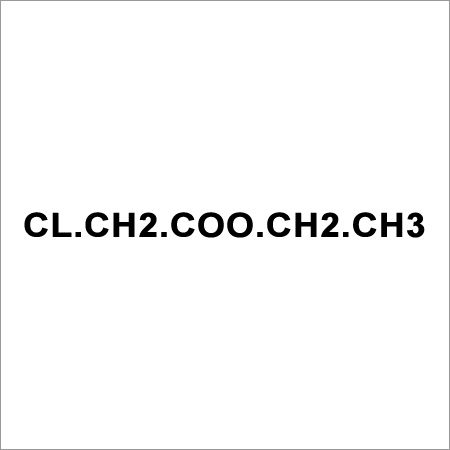
Tell us about your requirement

Price:
Quantity
Select Unit
- 50
- 100
- 200
- 250
- 500
- 1000+
Additional detail
Mobile number
Email

More Products in Aliphatic Esters Category
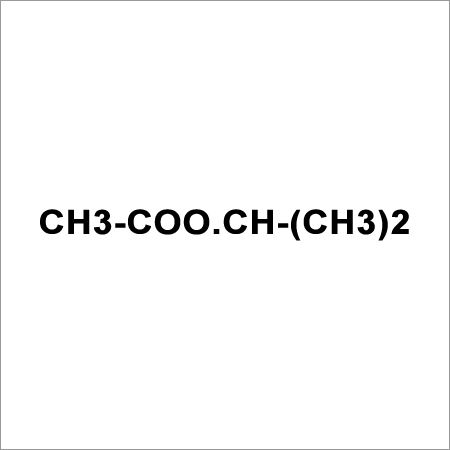
Isopropyl Acetate
EINECS No : 2035611
Boiling point : 88C
Melting Point : 90C
Density : 0.870 Gram per cubic centimeter(g/cm3)
Refractive Rate : 1.387
Grade : Industrial Grade
ETHYL OLEATE
EINECS No : 2040491
Boiling point : 216218C (15 mmHg)
Melting Point : 32C
Density : 0.870 Gram per cubic centimeter(g/cm3)
Refractive Rate : 1.4501.453 (20C)
Grade : Other, Pharma grade
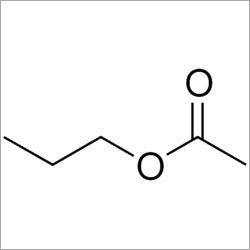
N Propyl Acetate
EINECS No : 2036861
Boiling point : 102C
Melting Point : 92C
Density : 0.884 Gram per cubic centimeter(g/cm3)
Refractive Rate : 1.3930
Grade : Industrial Grade
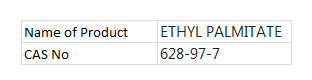
ETHYL PALMITATE
EINECS No : 2110483
Boiling point : 215C (at 20 mmHg)
Melting Point : 1719C
Density : 0.857 Gram per cubic centimeter(g/cm3)
Refractive Rate : 1.4341.438
Grade : Other, Industrial / Food Grade

Contact us

- Unit 1 :W-6, M.I.D.C., Chemical Zone, Ambernath (W), Ambernath - 421501, Maharashtra, India
- Phone : 08045479213
SONTARA ORGANO INDUSTRIES
GST : 27AAKFS5792F1ZP

- Mr. Mukesh B. Parekh (Partner)
- Mobile : 08045479213
- Send Inquiry
 Send Inquiry
 Send Inquiry
 Send SMS
 Call Me Free
SONTARA ORGANO INDUSTRIES
All Rights Reserved.(Terms of Use)
Developed and Managed by Infocom Network Private Limited.
Developed and Managed by Infocom Network Private Limited.


 English
 Spanish
 French
 German
 Italian
 Chinese (Simplified)
 Japanese
 Korean
 Arabic
 Portuguese