

 Send Inquiry
1,2,3- tribromo-propan
MOQ : 1 Kilograms
1,2,3- tribromo-propan Specification
- Molecular Formula
- C3H5Br3
- Refractive Rate
- 1.548
- Boiling point
- 200C
- Molecular Weight
- 282.79 g/mol
- HS Code
- 29036990
- Structural Formula
- CH2Br-CHBr-CH2Br
- Smell
- Characteristic odor
- Grade
- Industrial Grade
- Purity
- 98%
- Application
- Used in organic synthesis and chemical research
- Appearance
- Colorless to pale yellow liquid
- CAS No
- 96-11-7
- EINECS No
- 202-481-4
- Other Names
- Tribromopropane
- Usage
- Intermediate in chemical production flame retardants
- Melting Point
- -29C
- Density
- 2.51 Gram per cubic centimeter(g/cm3)
- Solubility
- Insoluble in water soluble in organic solvents
- Raw Material
- Propane and bromine
1,2,3- tribromo-propan Trade Information
- Minimum Order Quantity
- 1 Kilograms
- Supply Ability
- 100 Kilograms Per Month
- Delivery Time
- 7 Days
- Main Export Market(s)
- Asia, Australia, Central America, North America, South America, Eastern Europe, Western Europe, Middle East, Africa
1,2,3- tribromo-propan About
CAS Number 96-11-7
Linear Formula BrCH2CH(Br)CH2Br
Molecular Weight 280.78
EC Number 202-478-8
MDL number MFCD00017884
Synonyms :
1,2,3-tribromo-propan;
Glyceryl tribromohydrin;glyceryltribromohydrin;
Propane, 1,2,3-tribromo-;propane,1,2,3-tribromo-;s-Tribromopropane;
sym-Tribromopropane;
GLYCEROL TRIBROMOHYDRIN
Key Application in Organic Synthesis
1,2,3-Tribromo-propan serves as a strategic intermediate for organic synthesis, particularly in the development of flame retardants and specialty chemicals. Its reactivity allows chemists to create a range of derivatives, making it indispensable for research laboratories and industrial chemical processes alike.
Physical and Chemical Characteristics
Boasting a high density of 2.51 g/cm3 and a boiling point of 200C, 1,2,3-tribromo-propan is insoluble in water but dissolves readily in organic solvents. Its industrial-grade purity and characteristic odor underscore its suitability for controlled chemical applications.
FAQ's of 1,2,3-tribromo-propan:
Q: How is 1,2,3-tribromo-propan typically used in industry and research?
A: 1,2,3-Tribromo-propan is primarily employed as an intermediate in organic synthesis, particularly for manufacturing flame retardants. It is also utilized in various chemical research applications where a brominated hydrocarbon is needed.Q: What is the process for producing 1,2,3-tribromo-propan?
A: The compound is manufactured through the bromination of propane using bromine as a reactant. This process selectively adds bromine atoms to the propane molecule, forming the 1,2,3-tribromo derivative.Q: When should 1,2,3-tribromo-propan be handled with caution?
A: Due to its chemical reactivity and characteristic odor, handling should occur in a well-ventilated area, using appropriate safety equipment. Its use should be restricted to trained professionals within controlled industrial or laboratory settings.Q: Where can 1,2,3-tribromo-propan be sourced or supplied?
A: It is available from specialized chemical manufacturers, exporters, and suppliers, particularly in countries like India. The chemical is distributed for industrial and laboratory use, adhering to relevant safety and purity standards.Q: What benefits does 1,2,3-tribromo-propan offer for chemical synthesis?
A: Its high purity and efficiency as a brominated intermediate make it ideal for synthesizing complex molecules, especially flame retardants, thus supporting diverse applications in chemical manufacturing.Q: Is 1,2,3-tribromo-propan soluble in water or other solvents?
A: This compound is insoluble in water but demonstrates good solubility in organic solvents, which enhances its versatility in organic reactions and process chemistry.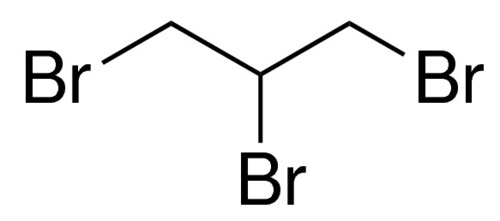
Tell us about your requirement

Price:
Quantity
Select Unit
- 50
- 100
- 200
- 250
- 500
- 1000+
Additional detail
Mobile number
Email

More Products in Aliphatic Bromide Category
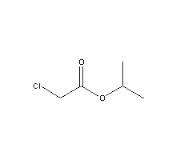
Isoporpyle Chloro Acetate
Minimum Order Quantity : 1 Kilograms
Structural Formula : C3H7OC(O)CH2Cl
CAS No : 543271
Application : Pharmaceutical Intermediates, Synthesis of chemicals
Smell : Other, Fruity, pungent odor
Raw Material : Isopropanol, Chloroacetic acid
Lithium Chloride 40% Sol.
Minimum Order Quantity : 1 Kilograms
Structural Formula : LiCl
CAS No : 7447418
Application : Used in manufacturing of lithiumion batteries air conditioning industries and as a drying agent
Smell : Other, Odorless
Raw Material : Lithium and Hydrochloric acid
Bromoform
Minimum Order Quantity : 1 Kilograms
Structural Formula : CHBr
CAS No : 75252
Application : Industrial usage
Smell : Other, Sweet odor
Raw Material : Bromine
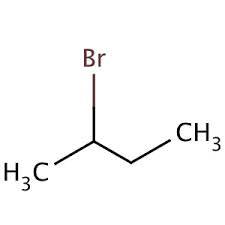
2-Bromobutane 98%
Minimum Order Quantity : 1 Kilograms
Structural Formula : CH3CH(Br)CH2CH3
CAS No : 78762
Application : Organic synthesis
Smell : Sweet ethereal odor, Other
Raw Material : Butane

Contact us

- Unit 1 :W-6, M.I.D.C., Chemical Zone, Ambernath (W), Ambernath - 421501, Maharashtra, India
- Phone : 08045479213
SONTARA ORGANO INDUSTRIES
GST : 27AAKFS5792F1ZP

- Mr. Mukesh B. Parekh (Partner)
- Mobile : 08045479213
- Send Inquiry
 Send Inquiry
 Send Inquiry
 Send SMS
SONTARA ORGANO INDUSTRIES
All Rights Reserved.(Terms of Use)
Developed and Managed by Infocom Network Private Limited.
Developed and Managed by Infocom Network Private Limited.


 English
 Spanish
 French
 German
 Italian
 Chinese (Simplified)
 Japanese
 Korean
 Arabic
 Portuguese