

 Send Inquiry
Beta- Phenyl 1- Bromobutane
MOQ : 1 Kilograms
Beta- Phenyl 1- Bromobutane Specification
- Boiling point
- 258-260C
- Structural Formula
- C6H5CH2CH2CH2Br
- Smell
- Characteristic aromatic odor
- Refractive Rate
- 1.553 (at 20C)
- Molecular Weight
- 213.12 g/mol
- Taste
- Not Determined
- Molecular Formula
- C10H13Br
- Grade
- Laboratory/Reagent Grade
- Purity
- 98% minimum
- Application
- Used as a chemical intermediate in organic synthesis, pharmaceuticals and agrochemicals
- Appearance
- Clear to pale yellow liquid
- CAS No
- 34823-43-9
- Other Names
- 1-Bromo-1-phenylbutane, Bromo--phenylbutane
- Usage
- Laboratory research, synthesis of specialty chemicals
- Density
- 1.233 Gram per cubic centimeter(g/cm3)
- Solubility
- Insoluble in water, soluble in organic solvents
- Raw Material
- Benzene, 1-bromobutane
- Product Code
- BPB-2705637
- Transport Information
- UN Number not regulated, handle as per chemical safety guidelines
- Storage Conditions
- Store in cool, dry, well-ventilated area away from incompatible substances
- Vapor Pressure
- 0.03 mm Hg at 25C
- Packaging Type
- Fluorinated bottles or glass containers
- Hazard Statement
- Harmful if swallowed, irritant
- Color
- Colorless to pale yellow
- Stability
- Stable under recommended storage conditions
- Shelf Life
- 24 months from manufacturing date
- Precautionary Statements
- Use protective equipment, avoid inhalation
- Flash Point
- >110C
Beta- Phenyl 1- Bromobutane Trade Information
- Minimum Order Quantity
- 1 Kilograms
- Supply Ability
- 100 Kilograms Per Month
- Delivery Time
- 7 Days
- Sample Available
- No
- Main Export Market(s)
- Asia, Australia, Central America, North America, South America, Eastern Europe, Western Europe, Middle East, Africa
Beta- Phenyl 1- Bromobutane About
| Name of Product | Beta- Phenyl 1- Bromobutane |
| CAS No | 103-63-9 |
| Formula | C8H9Br |
| IUPAC Name | 2-bromoethylbenzene |
| InChI | InChI=1S/C8H9Br/c9-7-6-8-4-2-1-3-5-8/h1-5H,6-7H2 |
| InChI Key | WMPPDTMATNBGJN-UHFFFAOYSA-N |
| Canonical SMILES | C1=CC=C(C=C1)CCBr |
| CAS | 103-63-9 |
| EC Number | 203-130-8 |
| UNII | 96O442668X |
| Wikipedia | 2-Phenylethylbromide |
| Description | Clear, colorless to yellow colored liquid |
| Purity by GC | Not less than 98.0% |
| Acidity | Not more than 0.1 % |
| Water | Not more than 0.2 % |
| Other name / synonyms | (2-BROMOETHYL)BENZENE |
| Phenethyl bromide | |
| 103-63-9 | |
| 2-Phenylethyl bromide | |
| Benzene, (2-bromoethyl)- | |
| Phenylethyl bromide | |
| 1-Bromo-2-phenylethane | |
| 2-Phenethyl bromide | |
| 2-Phenyl-1-bromoethane | |
| beta-Bromoethylbenzene | |
| .beta.-Bromoethylbenzene | |
| Bromoethylbenzene | |
| Polystyrene A-Br | |
| 3-Bromoethylbenzene | |
| Benzene, bromoethyl- | |
| .beta.-Phenethyl bromide | |
| NSC 33926 | |
| (2-Bromoethyl)polystyrene | |
| .beta.-Phenylethyl bromide | |
| Phenylethyl bromide (VAN) | |
| 2-(BROMOETHYL)BENZENE | |
| HSDB 5352 | |
| WMPPDTMATNBGJN-UHFFFAOYSA-N | |
| EINECS 203-130-8 | |
| AI3-11264 | |
| phenethylbromide | |
| phenethyl bromine | |
| phenylethylbromide | |
| 2-bromoethylbenzen | |
| 2-phenylethylbromide | |
| (2bromoethyl)benzene | |
| 2-bromo-ethylbenzene | |
| 2-bromoethyl benzene | |
| 2-bromoethyl-benzene | |
| 2-Bromoethyl)benzene | |
| beta-phenylethylbromide | |
| (2-phenyl)bromoethane | |
| 1-(bromoethyl)benzene | |
| 2-phenyl ethyl bromide | |
| 2-phenyl-ethyl bromide | |
| ar-Monobromoethylbenzene | |
| (2-bromo ethyl)benzene | |
| (2-bromoethyl) benzene | |
| 1-phenyl-2-bromoethane | |
| 2-(bromo-ethyl)benzene | |
| 2-(bromoethyl)-benzene | |
| (2-Bromoethyl)-benzene | |
| (2-bromo-ethyl)-benzene | |
| ACMC-1BQ3U | |
| 2-phenyl-1-ethyl bromide | |
| AC1L1PA3 | |
| AC1Q27TI | |
| SCHEMBL1552 | |
| DSSTox_CID_13876 | |
| DSSTox_RID_79100 | |
| 1-(2-bromo-ethyl)-benzene | |
| DSSTox_GSID_33876 | |
| B65780_ALDRICH | |
| KSC174Q4D | |
| MLS001055470 | |
| 81535_ALDRICH | |
| Jsp000371 | |
| CHEMBL1340745 | |
| 81535_FLUKA | |
| CTK0H4841 | |
| MolPort-000-151-983 | |
| BB_SC-6958 | |
| HMS3039C09 | |
| UNII-96O442668X | |
| NSC 6534 | |
| NSC33926 | |
| STR01487 | |
| EINECS 250-734-2 | |
| Tox21_200102 | |
| ANW-14941 | |
| AR-1C5119 | |
| BBL027290 | |
| NSC-33926 | |
| SBB059945 | |
| ZINC01665971 | |
| AKOS005216002 | |
| AN-6149 | |
| MCULE-6003855472 | |
| RP24508 | |
| RTR-000846 | |
| NCGC00090999-01 | |
| NCGC00090999-02 | |
| NCGC00257656-01 | |
| AJ-29009 | |
| AK-54085 | |
| BC203736 | |
| BP-30043 | |
| CAS-103-63-9 | |
| CJ-06049 | |
| CJ-26944 | |
| K795 | |
| KB-01018 | |
| KB-30565 | |
| LS-29200 | |
| SMR001227201 | |
| DB-002310 | |
| DB-020722 | |
| ST2407878 | |
| TR-000846 | |
| 96O442668X | |
| B0594 | |
| FT-0604607 | |
| FT-0607456 | |
| ST51046210 | |
| M-6016 | |
| 29458-EP2311840A1 | |
| 29458-EP2311842A2 | |
| A800773 | |
| I01-0451 | |
| I01-0633 | |
| I01-5328 | |
| 3B3-020240 | |
| 107175-46-2 |
Key Features and Handling
Beta-Phenyl 1-Bromobutane possesses a high degree of purity, ensuring its effectiveness as an organic intermediate. It is handled with care, using appropriate protective equipment to minimize health risks, as its harmful if swallowed and can be an irritant. Proper handling also involves adequate ventilation and storage in compatible containers to maintain product integrity and safety.
Application and Benefits
Utilized primarily as a chemical intermediate, Beta-Phenyl 1-Bromobutane facilitates the synthesis of pharmaceuticals and agrochemicals, adding significant value in research and industrial environments. Its high purity and dependable stability enhance process reliability and end-product quality, making it suitable for demanding laboratory and manufacturing scenarios.
Safe Storage and Stability
The product must be kept in a cool, dry, and well-ventilated place, away from incompatible substances. It remains stable under these recommended storage conditions for up to 24 months from the manufacturing date. Packaging in fluorinated or glass bottles ensures product longevity and prevents contamination or degradation.
FAQs of Beta- Phenyl 1- Bromobutane:
Q: How should Beta-Phenyl 1-Bromobutane be safely stored and handled?
A: Beta-Phenyl 1-Bromobutane should be stored in a cool, dry, well-ventilated area, away from substances with which it may react. It must be kept in fluorinated or glass containers to ensure stability. When handling, use appropriate protective equipment such as gloves and goggles to avoid ingestion or skin contact, as the compound can be harmful and irritant.Q: What are the primary applications for this chemical intermediate?
A: This compound is primarily used as an intermediate in organic synthesis, pharmaceuticals, and agrochemical production. Its high purity and chemical properties make it suitable for laboratory research and specialty chemical manufacturing.Q: When does Beta-Phenyl 1-Bromobutane expire, and how long can it be stored?
A: Beta-Phenyl 1-Bromobutane has a shelf life of 24 months from the date of manufacturing, provided it is stored according to the recommended conditions in suitable containers, away from incompatible materials.Q: Where is this product manufactured and exported from?
A: Beta-Phenyl 1-Bromobutane is manufactured, supplied, and exported from India, adhering to rigorous industry standards to ensure product quality and consistency for research and industrial uses.Q: What benefits does using Beta-Phenyl 1-Bromobutane offer in organic synthesis?
A: The high purity and reliable stability of Beta-Phenyl 1-Bromobutane provide consistent results in organic synthesis. It contributes to improved product yields and quality, supporting the development of pharmaceuticals, agrochemicals, and specialty compounds.Q: How is Beta-Phenyl 1-Bromobutane typically used in laboratory processes?
A: In laboratory settings, Beta-Phenyl 1-Bromobutane is used as a reagent or intermediate in the preparation of more complex molecules, contributing to various research, developmental, and analytical processes.Q: What precautions should be taken during the transportation and disposal of this compound?
A: Although not regulated under a UN number for transport, Beta-Phenyl 1-Bromobutane should be handled as per chemical safety guidelines: use secure packaging, avoid spills, and ensure handlers are trained. Dispose of waste according to local environmental and chemical safety regulations.
Tell us about your requirement

Price:
Quantity
Select Unit
- 50
- 100
- 200
- 250
- 500
- 1000+
Additional detail
Mobile number
Email

More Products in Aliphatic Bromide Category
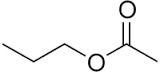
N-Propyl Acetate
Minimum Order Quantity : 1 Kilograms
Appearance : Colorless liquid
Structural Formula : CH3COOCH2CH2CH3
Solubility : Negligibly soluble in water soluble in organic solvents
Molecular Weight : 102.13 g/mol
Other Names : Propyl acetate Acetic acid propyl ester

N Pentyl Bromide
Minimum Order Quantity : 1 Kilograms
Appearance : Clear colorless liquid
Structural Formula : CH3(CH2)4Br
Solubility : Insoluble in water; soluble in organic solvents
Molecular Weight : 151.05 g/mol
Other Names : 1Bromopentane
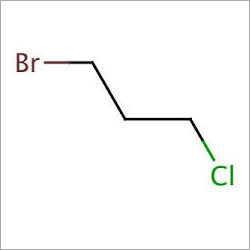
1-Bromo-3-Chloropropane
Minimum Order Quantity : 1 Kilograms
Appearance : Clear colorless to pale yellow liquid
Structural Formula : BrCH2CH2CH2Cl
Solubility : Insoluble in water; soluble in organic solvents like ethanol, ether, chloroform
Molecular Weight : 157.44 g/mol
Other Names : 3Bromopropyl chloride
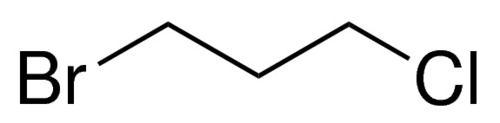
1 Bromo 3 Chloro Propane
Minimum Order Quantity : 1 Kilograms
Appearance : Colorless to light yellow transparent liquid
Structural Formula : BrCH2CH2CH2Cl
Solubility : Insoluble in water, soluble in organic solvents
Molecular Weight : 157.44 g/mol
Other Names : 3Chloropropyl Bromide

Contact us

- Unit 1 :W-6, M.I.D.C., Chemical Zone, Ambernath (W), Ambernath - 421501, Maharashtra, India
- Phone : 08045479213
SONTARA ORGANO INDUSTRIES
GST : 27AAKFS5792F1ZP

- Mr. Mukesh B. Parekh (Partner)
- Mobile : 08045479213
- Send Inquiry
 Send Inquiry
 Send Inquiry
 Send SMS
 Call Me Free
SONTARA ORGANO INDUSTRIES
All Rights Reserved.(Terms of Use)
Developed and Managed by Infocom Network Private Limited.
Developed and Managed by Infocom Network Private Limited.


 English
 Spanish
 French
 German
 Italian
 Chinese (Simplified)
 Japanese
 Korean
 Arabic
 Portuguese