Dibromopropane
Dibromopropane

Dibromopropane

Dibromopropane Specification

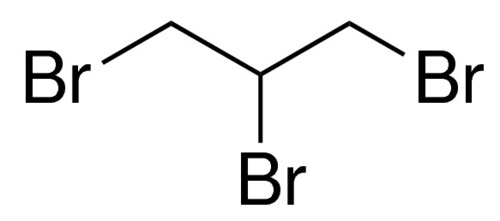
  • Structural Formula
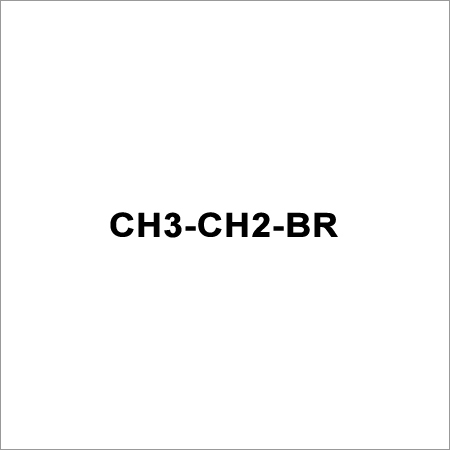
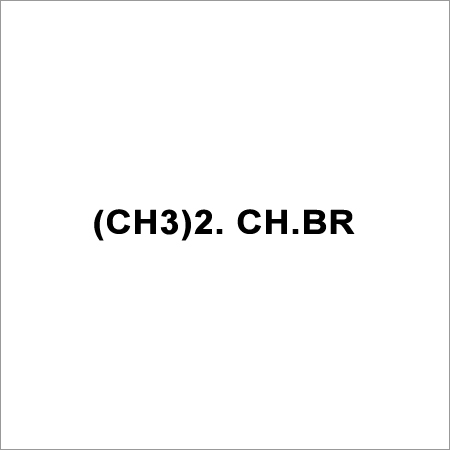
  • BrCH2CH2CH2Br
  • Refractive Rate
  • 1.497
  • Molecular Formula
  • C3H6Br2
  • HS Code
  • 29033990
  • Smell
  • Sweetish, pleasant
  • Boiling point
  • 196C
  • Molecular Weight
  • 201.89 g/mol
  • Classification
  • Aliphatic Organic Compound
  • Grade
  • Industrial
  • Purity
  • 98% min
  • Application
  • Pharmaceuticals, chemical synthesis, agrochemicals, intermediates
  • Appearance
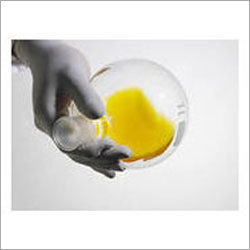
  • Clear, colorless to pale yellow liquid
  • CAS No
  • 109-64-8
  • EINECS No
  • 203-688-3
  • Other Names
  • 1,3-Dibromopropane; Propane, 1,3-dibromo-
  • Usage
  • Laboratory reagent, organic synthesis, industrial intermediate
  • Melting Point
  • -30C
  • Density
  • 2.066 Gram per cubic centimeter(g/cm3)
  • Solubility
  • Insoluble in water; soluble in organic solvents
  • Raw Material
  • Bromine, propane or related hydrocarbons


About Dibromopropane

Name of Product 1,3 Dibromo propane
CAS No 109-64-8
Formula C3H6Br2
IUPAC Name 1,3-dibromopropane
InChI InChI=1S/C3H6Br2/c4-2-1-3-5/h1-3H2
InChI Key VEFLKXRACNJHOV-UHFFFAOYSA-N
Canonical SMILES C(CBr)CBr
EC Number 203-690-3
UNII YQR3048IX9
Description : Clear, colorless to pale yellow liquid.
Water : Not more than 0.1 %
Acidity : Not more than 0.1%
Purity by GC : Not less than 98.50 %
Other name / synonyms 1,3-DIBROMOPROPANE

Trimethylene bromide

Trimethylene dibromide

109-64-8

Propane, 1,3-dibromo-

1,3-dibrompropan

.alpha.,.gamma.-Dibromopropane

1,3-dibromo propane

1,3-dibromo-propane

alpha,gamma-Dibromopropane

CCRIS 6711

HSDB 7408

.omega.,.omega.'-Dibromopropane

VEFLKXRACNJHOV-UHFFFAOYSA-N

EINECS 203-690-3

NSC 62663

AI3-28592

Trimethylenebromide

1,3dibromopropane

1,3-dibromopropan

1,3 dibromopropane

1.3-dibromopropane

1, 3-dibromopropane

1,3- dibromopropane

Dibromopropane

Dibromo-1,3 propane

CH2BrCH2CH2Br

ACMC-1BSTB

DSSTox_CID_1902

1,3-bis(bromanyl)propane

AC1L1Q1C

AC1Q27TS

SCHEMBL2175

WLN: E3E

DSSTox_RID_76394

UNII-YQR3048IX9

DSSTox_GSID_21902

KSC176O8L

YQR3048IX9

CTK0H6785

MolPort-000-153-905

BB_SC-6684

KST-1B6720

125903_SIAL

NSC62663

Tox21_202716

ANW-16075

AR-1B6825

BBL011375

NSC-62663

SBB060203

STL146473

AKOS000118758

MCULE-6500110480

RP25897

RTC-030976

TRA0027650

NCGC00260264-01

AN-22565

CAS-109-64-8

SC-79111

DB-003852

KB-150183

LS-119947

TC-030976

TL8000305

D0202

FT-0606630

ST51046433

51052-EP2272843A1

51052-EP2272848A1

51052-EP2280006A1

51052-EP2280012A2

51052-EP2281817A1

51052-EP2292621A1

51052-EP2305254A1

51052-EP2311824A1

51052-EP2371808A1

InChI=1/C3H6Br2/c4-2-1-3-5/h1-3H

A802067

I14-0240

3B3-020131


Key Properties and Applications

Dibromopropane features high purity (min. 98%), a boiling point of 196C, and a density of 2.066 g/cm. Its main applications are in organic synthesis, as a pharmaceutical and agrochemical intermediate, and as a laboratory reagent. Its clear, colorless to pale yellow appearance and solubility in organic solvents make it suitable for a range of industrial purposes.


Safe Handling and Storage Tips

To maintain stability and product quality, Dibromopropane should be stored below 30C in tightly sealed containers. It is classified as a flammable liquid and irritant; keep it away from heat, open flames, and ignition sources. Proper ventilation and the use of protective equipment are advised during handling to prevent inhalation or absorption.


Benefits and Versatile Uses

With its broad applicability in pharmaceuticals, chemical synthesis, and agrochemicals, Dibromopropane serves as a valuable intermediate in manufacturing. Its reliable shelf life (up to two years if stored correctly) and industrial grade specification make it a preferred choice for manufacturers, exporters, and suppliers in India.

FAQs of Dibromopropane:


Q: How should Dibromopropane be safely stored to preserve its stability and shelf life?

A: Dibromopropane should be stored below 30C in a tightly closed container, away from sources of ignition and direct sunlight, to maintain its stability and achieve its maximum shelf life of two years.

Q: What precautions are necessary when handling Dibromopropane in industrial or laboratory settings?

A: Appropriate personal protective equipment, such as gloves and eye protection, should be worn. Use the chemical in well-ventilated areas and avoid inhalation or absorption, as Dibromopropane acts as an irritant and can be harmful if exposed.

Q: When is Dibromopropane typically used during the chemical synthesis process?

A: Dibromopropane is often employed as an intermediate during organic synthesis, particularly in the preparation of pharmaceuticals and agrochemicals, where its brominated structure is essential for introducing specific functionalities into target molecules.

Q: What are the main benefits of using Dibromopropane as an intermediate in manufacturing?

A: Dibromopropane offers high purity, chemical stability under recommended storage conditions, and versatility in organic synthesis, making it useful for producing various pharmaceuticals, agrochemicals, and specialty chemicals.

Q: Where is Dibromopropane most commonly utilized?

A: It is predominantly used in chemical manufacturing facilities, pharmaceutical laboratories, and agrochemical synthesis plants, mainly across industrial sectors in India and for export markets.

Q: How is Dibromopropane typically transported to ensure safety and compliance?

A: Dibromopropane is transported according to UN Number 1993 under Packing Group III as a Class 3 flammable liquid. It must be contained securely and labeled appropriately to meet transport safety regulations.

Tell us about your requirement
product

Price:

Quantity
Select Unit

  • 50
  • 100
  • 200
  • 250
  • 500
  • 1000+
Additional detail
Mobile number

Email

More Products in Aliphatic Bromide Category

1 4- Dibromobutane

1 4- Dibromobutane

Usage : Used in synthesis of pharmaceuticals and agrochemicals; crosslinking agent

Purity : 98%

Solubility : Insoluble in water; soluble in organic solvents

Refractive Rate : n20/D 1.502

CAS No : 110521

Other Names : Tetramethylene dibromide; 1,4Butylene dibromide

Beta- Phenyl 1- Bromobutane

Beta- Phenyl 1- Bromobutane

Usage : Laboratory research, synthesis of specialty chemicals

Purity : 98% minimum

Solubility : Insoluble in water, soluble in organic solvents
Refractive Rate : 1.553 (at 20C)

CAS No : 34823439

Other Names : 1Bromo1phenylbutane, Bromophenylbutane

Ethyl Aceto Acetate

Ethyl Aceto Acetate

Usage : Intermediate in organic synthesis

Purity : 99% min

Solubility : Miscible with ethanol, ether; slightly soluble in water

Refractive Rate : 1.4181.420

CAS No : 141979

Other Names : EAA, Ethyl 3Oxobutanoate

2-Ethyl Hexyl Bromide

2-Ethyl Hexyl Bromide

Usage : Organic synthesis and pharmaceutical intermediate

Purity : 99%

Solubility : Insoluble in water soluble in organic solvents

Refractive Rate : 1.448 (20C)

CAS No : 4292528

Other Names : 1Bromo2ethylhexane


Back to top