

 Send Inquiry
Methyl - 3 - Oxopentanoate
MOQ : 1 Kilograms
Methyl - 3 - Oxopentanoate Specification
- Structural Formula
- CH3COCH2COOCH3
- Molecular Weight
- 130.14 g/mol
- HS Code
- 29183000
- Boiling point
- 169-170°C
- Molecular Formula
- C6H10O3
- Refractive Rate
- n20/D 1.418
- Smell
- Fruity, pleasant odor
- Taste
- Slightly sweet
- Grade
- Industrial / Pharmaceutical Grade
- Purity
- 98% Min
- Application
- Pharmaceutical intermediates, chemical synthesis
- Appearance
- Colorless to light yellow liquid
- CAS No
- 600-22-6
- EINECS No
- 210-006-0
- Other Names
- Methyl acetoacetate; Acetoacetic acid methyl ester
- Usage
- Used in the preparation of pharmaceuticals, agrochemicals, and dyes
- Melting Point
- -22°C
- Density
- 1.052 Gram per cubic centimeter(g/cm3)
- Solubility
- Soluble in alcohol, ether, and chloroform; slightly soluble in water
- Raw Material
- Derived from acetoacetic acid
- Storage Conditions
- Store in a cool, dry, well-ventilated area, away from sources of ignition and strong oxidizing agents
- Flash Point
- 62C
- Hazard Statement
- Flammable liquid and vapor. Handle with care.
- Shelf Life
- 24 months
- Vapor Pressure
- 2 mmHg at 20C
- Stability
- Stable under recommended storage conditions
- Packaging
- Available in 200 kg drums or ISO tanks
Methyl - 3 - Oxopentanoate Trade Information
- Minimum Order Quantity
- 1 Kilograms
- Supply Ability
- 100 Kilograms Per Month
- Delivery Time
- 7 Days
- Main Export Market(s)
- Asia, Australia, Central America, North America, South America, Eastern Europe, Western Europe, Middle East, Africa
Methyl - 3 - Oxopentanoate About
| Name of Product | Methyl 3 -Oxopentanoate |
| CAS No | 6149-41-3 |
| Formula | C5H10O3 |
| IUPAC Name | methyl 3-nitrobenzoate |
| InChI | InChI=1S/C8H7NO4/c1-13-8(10)6-3-2-4-7(5-6)9(11)12/h2-5H,1H3 |
| InChI Key | AXLYJLKKPUICKV-UHFFFAOYSA-N |
| Canonical SMILES | COC(=O)C1=CC(=CC=C1)[N+](=O)[O-] |
| EC Number | 210-573-0 |
| Other name / synonyms | Methyl 3-hydroxybutanoate |
| Methyl 3-hydroxybutyrate | |
| Methyl-3-hydroxybutyrate | |
| BUTYRIC ACID, 3-HYDROXY-, METHYL ESTER | |
| (R)-Methyl3-Hydroxybutanoate | |
| (S)-Methyl3-Hydroxybutanoate | |
| 1487-49-6 | |
| EINECS 216-068-1 | |
| Butanoic acid, 3-hydroxy-, methyl ester | |
| Methyl (S)-3-hydroxybutyrate | |
| Methyl (R)-3-hydroxybutanoate | |
| Butanoic acid, 3-hydroxy-, methyl ester, (S)- | |
| formyl 3-hydroxy-butanoate | |
| ACMC-209j7i | |
| ACMC-209l8o | |
| SCHEMBL53570 | |
| Methyl .beta.-hydroxybutyrate | |
| AC1L259E | |
| CH3CH(OH)CH2C(O)OCH3 | |
| CTK4C5920 | |
| LDLDJEAVRNAEBW-UHFFFAOYSA- | |
| LDLDJEAVRNAEBW-UHFFFAOYSA-N | |
| MolPort-006-113-331 | |
| EINECS 223-610-0 | |
| EINECS 258-628-8 | |
| LMFA07010513 | |
| AKOS009156905 | |
| NE22129 | |
| TRA0046335 | |
| TRA0058238 | |
| Butanoic acid,3-hydroxy-, methyl ester | |
| .beta.-Hydroxybutyric acid, methyl ester | |
| AN-17298 | |
| AN-17299 | |
| LS-48063 | |
| WE(1:0/4:0(3OH)) | |
| A6637 | |
| FT-0605058 | |
| Z3246 | |
| I14-4761 | |
| I14-4762 | |
| 3B3-024339 | |
| InChI=1/C5H10O3/c1-4(6)3-5(7)8-2/h4,6H,3H2,1-2H3 |
Versatile Chemical Intermediate for Multiple Industries
Methyl-3-Oxopentanoate is prized for its role as a key intermediate in chemical and pharmaceutical synthesis. Its purity and reactivity make it suitable for manufacturing not only pharmaceuticals but also agrochemicals and dyes, enabling streamlined production processes across sectors. This compound is essential for research labs and commercial facilities needing reliable, high-quality reagents.
Safe Storage and Handling Emphasized
Due to its flammable liquid and vapor properties, safe storage of Methyl-3-Oxopentanoate is crucial. It should be kept in a cool, dry, and well-ventilated area, distinctly away from heat, ignition sources, and strong oxidizers. Following manufacturer-recommended safety protocols, including using secure packaging and proper personal protective equipment, ensures safety and prolongs the products 24-month shelf life.
FAQs of Methyl - 3 - Oxopentanoate:
Q: How should Methyl-3-Oxopentanoate be safely stored and handled?
A: Methyl-3-Oxopentanoate should be stored in a cool, dry, well-ventilated area, away from sources of ignition and incompatible materials such as strong oxidizing agents. As it is a flammable liquid and vapor, handle with care, use appropriate protective gear, and ensure containers are tightly closed when not in use.Q: What are the primary applications of Methyl-3-Oxopentanoate?
A: This compound is mainly used as an intermediate in the synthesis of pharmaceuticals, agrochemicals, and dyes. Its high purity and favorable reactivity make it a valuable ingredient in various chemical manufacturing processes.Q: When does the shelf life of Methyl-3-Oxopentanoate expire, and how is shelf stability ensured?
A: The shelf life is 24 months under recommended storage conditions. Keeping the product in its original, sealed packaging away from heat sources and moisture ensures optimal stability and prevents degradation.Q: Where is Methyl-3-Oxopentanoate typically supplied from and how is it packaged?
A: This product is available from manufacturers, exporters, and suppliers in India. It is packaged in 200 kg drums or ISO tanks to facilitate secure storage and transportation.Q: What processes utilize Methyl-3-Oxopentanoate in chemical synthesis?
A: Methyl-3-Oxopentanoate is frequently involved as a building block in condensation, alkylation, and acylation reactions, serving as a reagent in the creation of complex molecules needed in pharmaceuticals and fine chemicals.Q: What are the benefits of using Methyl-3-Oxopentanoate in manufacturing and laboratory settings?
A: Its high purity (98% min.), predictable reactivity, and solubility profile make it ideal for specialized syntheses, ensuring consistent results and reducing impurities in finished products. Its fruity odor and manageable physical properties also aid in safer handling.
Tell us about your requirement

Price:
Quantity
Select Unit
- 50
- 100
- 200
- 250
- 500
- 1000+
Additional detail
Mobile number
Email

More Products in Aliphatic Bromide Category

Ethyl Bromide
Minimum Order Quantity : 1 Kilograms
Melting Point : 119 C
Smell : Other, Sweet, chloroformlike odor
Refractive Rate : 1.434
Solubility : Slightly soluble in water, miscible with organic solvents
Molecular Formula : C2H5Br
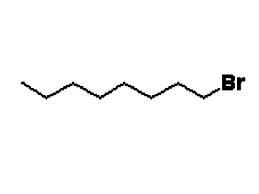
N- Octyl Bromide
Minimum Order Quantity : 1 Kilograms
Melting Point : 8 C
Smell : Other, Characteristic, Mild
Refractive Rate : n20/D 1.444
Solubility : Insoluble in Water, Soluble in Organic Solvents
Molecular Formula : C8H17Br

N Butyl Bromide
Minimum Order Quantity : 1 Kilograms
Melting Point : 112 C
Smell : Other, Pungent, etherlike odor
Refractive Rate : 1.4371.439 at 20C
Solubility : Insoluble in water; soluble in alcohol, ether, chloroform
Molecular Formula : C4H9Br
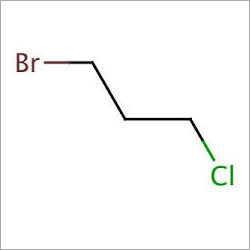
1-Bromo-3-Chloropropane
Minimum Order Quantity : 1 Kilograms
Melting Point : 60C
Smell : Other, Characteristic, pungent
Refractive Rate : n20/D 1.481
Solubility : Insoluble in water; soluble in organic solvents like ethanol, ether, chloroform
Molecular Formula : C3H6BrCl

Contact us

- Unit 1 :W-6, M.I.D.C., Chemical Zone, Ambernath (W), Ambernath - 421501, Maharashtra, India
- Phone : 08045479213
SONTARA ORGANO INDUSTRIES
GST : 27AAKFS5792F1ZP

- Mr. Mukesh B. Parekh (Partner)
- Mobile : 08045479213
- Send Inquiry
 Send Inquiry
 Send Inquiry
 Send SMS
 Call Me Free
SONTARA ORGANO INDUSTRIES
All Rights Reserved.(Terms of Use)
Developed and Managed by Infocom Network Private Limited.
Developed and Managed by Infocom Network Private Limited.


 English
 Spanish
 French
 German
 Italian
 Chinese (Simplified)
 Japanese
 Korean
 Arabic
 Portuguese