

 Send Inquiry
Methyl Chloro Acetate
MOQ : 1 Kilograms
Methyl Chloro Acetate Specification
- Smell
- Pleasant fruity odor
- Molecular Formula
- C3H5ClO2
- HS Code
- 2915
- Refractive Rate
- 1.421 (20C)
- Structural Formula
- Cl-CH2-COOCH3
- Molecular Weight
- 108.52 g/mol
- Boiling point
- 107.5C
- Classification
- Organic compound
- Organic Acid Types
- Halogenated ester
- Grade
- Industrial Grade
- Purity
- 98%
- Application
- Used as an intermediate in organic synthesis
- Appearance
- Colorless liquid
- CAS No
- 96-34-4
- EINECS No
- 202-504-8
- Other Names
- Chloroacetic acid methyl ester; Methyl 2-chloroacetate
- Usage
- Used in pharmaceuticals agrochemicals and dyes production
- Melting Point
- -45C
- Density
- 1.231 Gram per cubic centimeter(g/cm3)
- Solubility
- Slightly soluble in water soluble in organic solvents
- Raw Material
- Chloroacetic acid or derivatives
Methyl Chloro Acetate Trade Information
- Minimum Order Quantity
- 1 Kilograms
- Supply Ability
- 100 Kilograms Per Month
- Delivery Time
- 7 Days
- Main Export Market(s)
- Asia, Australia, Central America, North America, South America, Eastern Europe, Western Europe, Middle East, Africa
Methyl Chloro Acetate About
| Name of Product | Methyl Chloro Acetate | IUPAC Name | methyl 2-chloroacetate |
| CAS No | 96-34-4 | InChI | InChI=1S/C3H5ClO2/c1-6-3(5)2-4/h2H2,1H3 |
| Formula | C3H4BrClO2 | InChI Key | QABLOFMHHSOFRJ-UHFFFAOYSA-N |
| Other name / synonyms | Chloromethyl acetate | Canonical SMILES | COC(=O)CCl |
| 625-56-9 | CAS | 96-34-4 | |
| Chloromethyl ethanoate | EC Number | 202-501-1 | |
| Methanol, chloro-, acetate | ICSC Number | 1410 | |
| SMJYMSAPPGLBAR-UHFFFAOYSA-N | RTECS Number | AF9500000 | |
| Chloromethanol acetate | UN Number | 2295 | |
| Chloromethyl acetate # | UNII | 450VSB182I | |
| AC1L2BPH | |||
| AC1Q3VDL | Description | Clear, colourless liquid | |
| ghl.PD_Mitscher_leg0.478 | Acidity | Not more than 0.5 % | |
| acetic acid chloromethyl ester | Moisture (KF) | Not more than 0.1 % | |
| KSC492I3P | Purity by GC | Not less than 98.0% | |
| SCHEMBL194595 | |||
| CTK3J2437 | |||
| MolPort-001-785-628 | |||
| EBD31608 | |||
| EINECS 210-902-8 | |||
| ANW-34264 | |||
| AR-1I2057 | |||
| AKOS006274758 | |||
| RTC-030591 | |||
| AN-46828 | |||
| CJ-30179 | |||
| SC-47539 | |||
| AB0052938 | |||
| TC-030591 | |||
| FT-0080621 | |||
| FT-0600220 | |||
| Y1150 | |||
| A24540 | |||
| Chloromethyl ethanoate;Acetic acid chloromethyl | |||
| S-7939 | |||
| I04-0268 | |||
| 3B3-067155 |
A Versatile Intermediate for Organic Synthesis
Methyl Chloro Acetate serves as a critical building block in the synthesis of various organic compounds. Its reactivity as a halogenated ester enables the efficient production of pharmaceuticals, agrochemicals, and dyes. With a high level of purity and consistent quality, this substance supports complex chemical processes across industries, making it an essential component in modern manufacturing.
Physical Properties and Handling Requirements
This compound appears as a colorless liquid with a distinctive fruity smell, making its identification straightforward. Its melting point is -45C and it boils at 107.5C. Methyl Chloro Acetate is slightly soluble in water but is easily soluble in many organic solvents. Proper storage in well-ventilated and temperature-controlled areas is recommended to maintain product integrity for industrial applications.
FAQ's of Methyl Chloro Acetate:
Q: How is Methyl Chloro Acetate manufactured?
A: Methyl Chloro Acetate is typically synthesized using chloroacetic acid or its derivatives as raw materials, often via esterification processes involving methanol. Specialized equipment is required to handle its chemical reactivity and ensure high purity for industrial use.Q: What are the primary industrial applications of Methyl Chloro Acetate?
A: This compound is mainly used as an intermediate in the production of pharmaceuticals, agrochemicals, and dyes. Its chemical structure allows it to participate in a variety of organic reactions essential for synthesizing complex molecules.Q: When should Methyl Chloro Acetate be used in a chemical process?
A: Methyl Chloro Acetate is best used when a reactive halogenated ester is needed to introduce chloroacetyl groups or facilitate organic transformations in the manufacture of specialty chemicals and bioactive compounds.Q: Where is Methyl Chloro Acetate produced and supplied from?
A: Manufacturers and exporters in India are notable suppliers of Methyl Chloro Acetate, providing both domestic and international markets with industrial-grade material that meets quality and purity standards.Q: What is the benefit of using Methyl Chloro Acetate in synthesis?
A: Due to its high reactivity and purity (98%), Methyl Chloro Acetate ensures efficient yields and selective reactions, which are vital in the multi-step preparation of pharmaceuticals and other fine chemicals.Q: How should Methyl Chloro Acetate be stored and handled safely?
A: It should be stored in tightly sealed containers in a cool, well-ventilated area away from incompatible materials. Appropriate personal protective equipment is recommended when handling to avoid exposure.Q: Is Methyl Chloro Acetate soluble in water or organic solvents?
A: Methyl Chloro Acetate is slightly soluble in water but is easily soluble in a wide range of organic solvents, which makes it convenient for use in diverse chemical synthesis processes.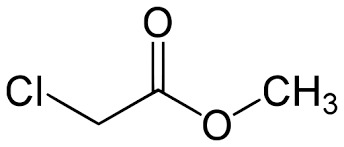
Tell us about your requirement

Price:
Quantity
Select Unit
- 50
- 100
- 200
- 250
- 500
- 1000+
Additional detail
Mobile number
Email

More Products in Aliphatic Bromide Category
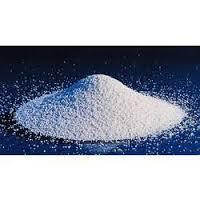
Lithium Chloride Powder
Minimum Order Quantity : 1 Kilograms
Solubility : Highly soluble in water, soluble in ethanol, methanol, acetone
HS Code : 28273900
Molecular Formula : LiCl
Application : Pharmaceuticals, Drying Agent, Electrolyte in lithiumion batteries, metallurgy, laboratory reagent
Smell : Other, Odorless
Hbr Gas in Acetic Acid
Minimum Order Quantity : 1 Kilograms
Solubility : Miscible with water and alcohol
HS Code : 28111990
Molecular Formula : HBr in Acetic Acid (mixture)
Application : Used as a bromination agent and analytical reagent in organic synthesis
Smell : Other, Pungent, acidic odor

3 - Chloropropionyl Chloride
Minimum Order Quantity : 1 Kilograms
Solubility : Reacts with water
HS Code : 29157090
Molecular Formula : C3H5ClO
Application : Organic synthesis intermediate in pharmaceutical manufacturing
Smell : Pungent
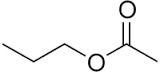
N-Propyl Acetate
Minimum Order Quantity : 1 Kilograms
Solubility : Negligibly soluble in water soluble in organic solvents
HS Code : 2915.39
Molecular Formula : C5H10O2
Application : Solvent in coatings inks and industrial cleaning
Smell : Other, Sweet fruity odor

Contact us

- Unit 1 :W-6, M.I.D.C., Chemical Zone, Ambernath (W), Ambernath - 421501, Maharashtra, India
- Phone : 08045479213
SONTARA ORGANO INDUSTRIES
GST : 27AAKFS5792F1ZP

- Mr. Mukesh B. Parekh (Partner)
- Mobile : 08045479213
- Send Inquiry
 Send Inquiry
 Send Inquiry
 Send SMS
SONTARA ORGANO INDUSTRIES
All Rights Reserved.(Terms of Use)
Developed and Managed by Infocom Network Private Limited.
Developed and Managed by Infocom Network Private Limited.


 English
 Spanish
 French
 German
 Italian
 Chinese (Simplified)
 Japanese
 Korean
 Arabic
 Portuguese