

 Send Inquiry
N-Pentyl Bromide
MOQ : 1 Kilograms
N-Pentyl Bromide Specification
- Structural Formula
- CH3(CH2)4Br
- Boiling point
- 130-132C
- Molecular Formula
- C5H11Br
- Smell
- Characteristic odor
- HS Code
- 2903699090
- Molecular Weight
- 151.05 g/mol
- Refractive Rate
- 1.442-1.444
- Classification
- Halogenated hydrocarbon
- Grade
- Industrial
- Purity
- 99%
- Application
- Used as an intermediate in organic synthesis
- Appearance
- Colorless liquid
- CAS No
- 111-24-0
- EINECS No
- 203-850-3
- Other Names
- Pentyl Bromide 1-Bromopentane
- Usage
- Intermediate for pharmaceuticals and agrochemicals
- Melting Point
- -95C
- Density
- 1.216 Gram per cubic centimeter(g/cm3)
- Solubility
- Insoluble in water; miscible with organic solvents
- Raw Material
- Pentanol
N-Pentyl Bromide Trade Information
- Minimum Order Quantity
- 1 Kilograms
- Supply Ability
- 100 Kilograms Per Month
- Delivery Time
- 7 Days
- Main Export Market(s)
- Asia, Australia, Central America, North America, South America, Eastern Europe, Western Europe, Middle East, Africa
N-Pentyl Bromide About
| Name of Product | N-Pentyl Bromide | IUPAC Name | 1-bromopentane |
| CAS No | 110-53-2 | InChI | InChI=1S/C5H11Br/c1-2-3-4-5-6/h2-5H2,1H3 |
| Formula | C5H11Br | InChI Key | YZWKKMVJZFACSU-UHFFFAOYSA-N |
| Other name / synonyms | 1-BROMOPENTANE | Canonical SMILES | CCCCCBr |
| n-Amyl bromide | EC Number | 203-776-0 | |
| Pentyl bromide | UN Number | 1993 | |
| Amyl bromide | UNII | Z2S4R599P0 | |
| Pentane, 1-bromo- | |||
| 110-53-2 | |||
| n-Pentyl bromide | |||
| 1-Pentyl bromide | |||
| Bromopentane | |||
| 1-Bromo-pentane | |||
| YZWKKMVJZFACSU-UHFFFAOYSA-N | |||
| NSC 7895 | |||
| EINECS 203-776-0 | |||
| SBB059933 | |||
| AI3-17813 | |||
| 5BR | |||
| amylbromide | |||
| pentylbromide | |||
| Bromoethylpropan | |||
| n-Pentylbromide | |||
| bromomethylbutane | |||
| 1-Pentylbromide | |||
| 1-bromo pentane | |||
| Pentane, bromo- | |||
| 1-bromanylpentane | |||
| 1-bromo-n-pentane | |||
| 1-Bromo-4 -methylbutane | |||
| n-C5H11Br | |||
| AC1Q27UC | |||
| AC1Q2VM9 | |||
| DSSTox_CID_28474 | |||
| DSSTox_RID_83278 | |||
| DSSTox_GSID_49203 | |||
| SCHEMBL11305 | |||
| KSC191C1L | |||
| UNII-Z2S4R599P0 | |||
| ACMC-20996b | |||
| 117811_ALDRICH | |||
| AC1L1Q60 | |||
| CHEMBL155850 | |||
| 17920_FLUKA | |||
| CTK0J1115 | |||
| NSC7895 | |||
| MolPort-001-768-933 | |||
| Z2S4R599P0 | |||
| NSC-7895 | |||
| Tox21_202717 | |||
| ANW-16161 | |||
| AR-1C2047 | |||
| STL280346 | |||
| ZINC01586300 | |||
| AKOS000118764 | |||
| MCULE-8513521912 | |||
| RP21432 | |||
| RTR-002164 | |||
| TRA0060989 | |||
| NCGC00260265-01 | |||
| AN-22610 | |||
| CAS-110-53-2 | |||
| CJ-25221 | |||
| KB-11813 | |||
| SC-16107 | |||
| LS-101546 | |||
| TR-002164 | |||
| B0628 | |||
| FT-0607542 | |||
| ST51046200 | |||
| 61484-EP2289965A1 | |||
| 61484-EP2298828A1 | |||
| 61484-EP2308848A1 | |||
| A802210 | |||
| 3B4-0637 | |||
| I14-0244 | |||
| InChI=1/C5H11Br/c1-2-3-4-5-6/h2-5H2,1H | |||
| 29756-38-5 |
Key Applications in Organic Synthesis
N-Pentyl Bromide serves as an essential intermediate in the production of pharmaceuticals, agrochemicals, and various organic compounds. Its halogenated structure allows easy incorporation into complex molecules, streamlining the synthetic pathway for numerous end products. Industrial manufacturers value its versatility and efficiency in diverse chemical reactions.
Physical and Chemical Characteristics
This compound appears as a colorless liquid with a distinct odor. With a refractive rate between 1.442 and 1.444 and insolubility in water, N-Pentyl Bromide is best mixed with organic solvents. Its stable density and defined boiling and melting points ensure consistent performance in industrial applications.
Advantages for Manufacturing and Export
Sourced from pentanol, N-Pentyl Bromide is available with high purity (99%) and meets industrial grade requirements. It is widely exported from India, supplied by reliable manufacturers, ensuring global accessibility for raw material needs in a variety of chemical industries.
FAQ's of N-Pentyl Bromide:
Q: How is N-Pentyl Bromide typically used in chemical industries?
A: N-Pentyl Bromide is mainly used as an intermediate in organic synthesis, particularly in the preparation of pharmaceuticals and agrochemicals. Its halogenated structure facilitates its participation in substitution and coupling reactions.Q: What advantages does N-Pentyl Bromide offer as an intermediate?
A: Its high purity (99%) and chemical stability make it an ideal intermediate, ensuring precise reactions and the formation of consistent end products in complex synthetic routes.Q: When should N-Pentyl Bromide be utilized in organic synthesis?
A: It is typically employed when a brominated alkyl chain is needed for further functionalization, especially in the early to intermediate stages of pharmaceutical and agrochemical manufacturing.Q: Where is N-Pentyl Bromide manufactured and supplied from?
A: N-Pentyl Bromide is produced by manufacturers and exporters in India and is readily available for international supply to meet industrial requirements.Q: What is the standard process for producing N-Pentyl Bromide?
A: N-Pentyl Bromide is usually synthesized from pentanol via halogenation using a brominating agent, followed by purification steps to achieve industrial-grade, high-purity output.Q: Is N-Pentyl Bromide soluble in water, and what solvents are preferred?
A: N-Pentyl Bromide is insoluble in water but is miscible with most organic solvents, making it suitable for organic-phase reactions and separation processes.Q: What types of industries benefit from using N-Pentyl Bromide?
A: Industries engaged in pharmaceuticals, agrochemicals, and specialty organic compound manufacturing benefit from using N-Pentyl Bromide as a versatile and reliable intermediate.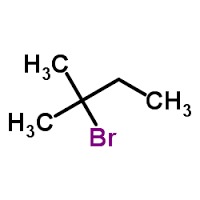
Tell us about your requirement

Price:
Quantity
Select Unit
- 50
- 100
- 200
- 250
- 500
- 1000+
Additional detail
Mobile number
Email

More Products in Aliphatic Bromide Category
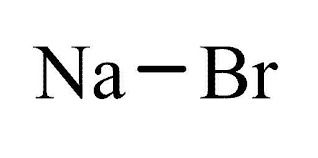
Sodium Bromide
Minimum Order Quantity : 1 Kilograms
Structural Formula : Na+ Br
Grade : Other, Industrial, Analytical
CAS No : 7647156
Boiling point : 1390C
Usage : Used as a source of bromide ion, for preparing other bromides, as a sedative, photography, and in water treatment
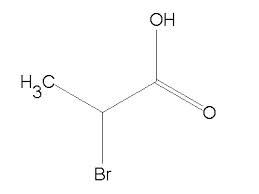
2-Bromopropane Acid
Minimum Order Quantity : 1 Kilograms
Structural Formula : CH3CHBrCOOH
Grade : Other, Analytical/Reagent Grade
CAS No : 598721
Boiling point : 189191 C
Usage : Used in the synthesis of pharmaceuticals, agrochemicals, and fine chemicals
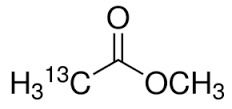
Methyl Acetate 99%
Minimum Order Quantity : 1 Kilograms
Structural Formula : CH3COOCH3
Grade : Industrial Grade
CAS No : 79209
Boiling point : 56.9 C
Usage : Used as a fastevaporating solvent
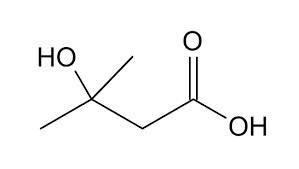
Methyl 3 -Oxopentanoate
Minimum Order Quantity : 1 Kilograms
Structural Formula : HOC(CH3)CH2C(=O)OCH3
Grade : Industrial Grade
CAS No : 1112818
Boiling point : 131132C
Usage : Organic synthesis and fine chemistry applications

Contact us

- Unit 1 :W-6, M.I.D.C., Chemical Zone, Ambernath (W), Ambernath - 421501, Maharashtra, India
- Phone : 08045479213
SONTARA ORGANO INDUSTRIES
GST : 27AAKFS5792F1ZP

- Mr. Mukesh B. Parekh (Partner)
- Mobile : 08045479213
- Send Inquiry
 Send Inquiry
 Send Inquiry
 Send SMS
SONTARA ORGANO INDUSTRIES
All Rights Reserved.(Terms of Use)
Developed and Managed by Infocom Network Private Limited.
Developed and Managed by Infocom Network Private Limited.


 English
 Spanish
 French
 German
 Italian
 Chinese (Simplified)
 Japanese
 Korean
 Arabic
 Portuguese