

 Send Inquiry
1-Bromo-3-Chloro Propane
MOQ : 1 Kilograms
1-Bromo-3-Chloro Propane Specification
- Refractive Rate
- 1.4701.473 (20C)
- Molecular Formula
- C3H6BrCl
- Smell
- Characteristic, irritating odor
- Molecular Weight
- 157.44 g/mol
- Boiling point
- 142-144C
- Structural Formula
- BrCH2CH2CH2Cl
- HS Code
- 2903.39.19
- Grade
- Industrial / Laboratory
- Purity
- 99%
- Application
- Organic synthesis, chemical intermediate, pharmaceutical intermediate
- Appearance
- Clear colorless to pale yellow liquid
- CAS No
- 109-70-6
- EINECS No
- 203-699-2
- Other Names
- 1-Bromo-3-chloropropane, 3-Chloropropyl bromide
- Usage
- Used as an alkylating agent, intermediate in pharmaceuticals and agrochemicals
- Melting Point
- -61C
- Density
- 1.552 Gram per cubic centimeter(g/cm3)
- Solubility
- Insoluble in water, soluble in most organic solvents
- Raw Material
- Propane derivatives, bromine, chlorine
- Hazard Class
- 6.1 (Toxic substances)
- Packaging
- Available in drums, HDPE containers
- Storage Conditions
- Store in a cool, dry, and well-ventilated area, away from sources of ignition and strong oxidizers
- Vapor Pressure
- 3 mmHg at 25C
- UN Number
- UN 2688
- Stability
- Stable under recommended storage conditions
- Transport
- Handle as a hazardous material, follow local regulations
- Shelf Life
- 2 years under sealed condition
- Flash Point
- 53C (Closed cup)
1-Bromo-3-Chloro Propane Trade Information
- Minimum Order Quantity
- 1 Kilograms
- Supply Ability
- 100 Kilograms Per Month
- Delivery Time
- 7 Days
- Main Export Market(s)
- Asia, Australia, Central America, North America, South America, Eastern Europe, Western Europe, Middle East, Africa
1-Bromo-3-Chloro Propane About
| Name of Product | 1-Bromo-3-Chloro Propane |
| CAS No | 109-70-6 |
| Formula | C3H6BrCl |
| IUPAC Name | 1-bromo-3-chloropropane |
| InChI | InChI=1S/C3H6BrCl/c4-2-1-3-5/h1-3H2 |
| InChI Key | MFESCIUQSIBMSM-UHFFFAOYSA-N |
| Canonical SMILES | C(CCl)CBr |
| EC Number | 203-697-1 |
| UNII | KA4WR2LS00 |
| ICSC Number | 1665 |
| RTECS Number | TX4113000 |
| UN Number | 2688 |
| Description : | Clear, colorless liquid |
| Purity by GC | 99.00% |
| Acidity : | Not more than 0.1 % |
| Water : | Not more than 0.1 % |
| Other name / synonyms | 1-BROMO-3-CHLOROPROPANE |
| 109-70-6 | |
| 3-Bromopropyl chloride | |
| 1-Chloro-3-bromopropane | |
| 3-Chloro-1-bromopropane | |
| Trimethylene chlorobromide | |
| Propane, 1-bromo-3-chloro- | |
| 3-Chloropropyl bromide | |
| 3-Bromo-1-chloropropane | |
| Trimethylene bromide chloride | |
| 1,3-Chbp | |
| .omega.-Chlorobromopropane | |
| 1,3-Chlorbromopropane | |
| omega-Chlorobromopropane | |
| I-BCP | |
| l-Chloro-3-bromopropane | |
| NSC 9183 | |
| Trimethylene bromochloride | |
| 1-Bromo-3-chloro-propane | |
| CCRIS 6536 | |
| HSDB 5394 | |
| MFESCIUQSIBMSM-UHFFFAOYSA-N | |
| EINECS 203-697-1 | |
| SBB058669 | |
| UN2688 | |
| BRN 0605278 | |
| bromopropylchloride | |
| 3-bromochloropropane | |
| 3-chlorobromopropane | |
| 3-chloropropylbromide | |
| 3-chloro-bromopropane | |
| 1-bromo-3chloropropane | |
| 1bromo-3-chloropropane | |
| 3-chloro1-bromopropane | |
| 3chloro-1-bromopropane | |
| ACMC-1BUXC | |
| 1,3-aaAE+/-uIe | |
| 1 -bromo-3-chloropropane | |
| 1-bromo-3- chloropropane | |
| 1-bromo-3-chloro propane | |
| 1-chloro-3-bromo-propane | |
| 3-bromo-1-chloro propane | |
| 3-bromo-1-chloro-propane | |
| 3-chloro-1- bromopropane | |
| UNII-KA4WR2LS00 | |
| 3-chloro-1-propyl bromide | |
| AC1L1Q1R | |
| SCHEMBL9330 | |
| KA4WR2LS00 | |
| B62404_ALDRICH | |
| KSC174M2P | |
| B9673_SIGMA | |
| 1-bromanyl-3-chloranyl-propane | |
| CHEMBL156560 | |
| CTK0H4627 | |
| NSC9183 | |
| MolPort-001-783-421 | |
| PROPANE,1-BROMO,3-CHLORO | |
| NSC-9183 | |
| AN-983 | |
| ANW-16084 | |
| AKOS000121201 | |
| EyNC(1/4)x>>uAEaa>> masculineIIi | |
| MCULE-7937580875 | |
| RP22132 | |
| RTR-002080 | |
| TRA0036249 | |
| UN 2688 | |
| AK105872 | |
| I843 | |
| SC-19098 | |
| KB-152371 | |
| LS-119641 | |
| TR-002080 | |
| B0575 | |
| FT-0607482 | |
| FT-0615245 | |
| FT-0615246 | |
| ST24037874 | |
| ST51037167 | |
| 1-Bromo-3-chloropropane [UN2688] [Poison] | |
| InChI=1/C3H6BrCl/c4-2-1-3-5/h1-3H | |
| 1-Bromo-3-chloropropane [UN2688] [Poison] | |
| 20664-EP2284169A1 | |
| 20664-EP2287161A1 | |
| 20664-EP2287162A1 | |
| 20664-EP2292615A1 | |
| 20664-EP2308833A2 | |
| 20664-EP2311824A1 | |
| 20664-EP2314585A1 | |
| 20664-EP2371808A1 | |
| 51205-EP2311824A1 | |
| 4-01-00-00212 (Beilstein Handbook Reference) | |
| A802077 | |
| 3B4-1028 | |
| I14-0241 |
Safe Handling and Storage
Maintain 1-Bromo-3-Chloro Propane in a cool, dry, and well-ventilated space, separated from ignition sources and oxidizers. This precaution minimizes degradation and reduces risks due to its toxicity and flammability. Suitable packaging includes secure drums or HDPE containers. Proper storage conditions ensure both safety and preservation of chemical integrity over its two-year shelf life.
Applications in Organic Synthesis
Due to its high purity and reactivity, 1-Bromo-3-Chloro Propane is widely employed as an alkylating agent and intermediate in synthesizing pharmaceuticals and agrochemicals. Its molecular structure enables diverse chemical transformations, making it valuable for industrial and laboratory research applications involving organic halides.
Transport and Regulatory Compliance
As a hazardous material (Hazard Class 6.1, UN 2688), this compound must be transported according to local and international regulations. Specialized handling and packaging are essential to prevent leaks, exposure, or environmental release during transit. Awareness of regulatory codes such as the HS Code 2903.39.19 ensures legal compliance.
FAQs of 1-Bromo-3-Chloro Propane:
Q: How should 1-Bromo-3-Chloro Propane be stored to maintain its stability?
A: Store this compound in tightly sealed, labeled containers made of suitable materials such as HDPE, in a cool, dry, and well-ventilated place. Ensure it is kept away from heat, sources of ignition, and strong oxidizers to preserve its stability and minimize risks.Q: What are the main applications of 1-Bromo-3-Chloro Propane?
A: 1-Bromo-3-Chloro Propane is primarily used as an alkylating agent and a chemical intermediate in the synthesis of pharmaceuticals, agrochemicals, and other organic compounds due to its reactivity and high purity.Q: When is it necessary to handle 1-Bromo-3-Chloro Propane as hazardous material?
A: It must always be handled as a hazardous material because it belongs to Hazard Class 6.1 (toxic substances). This applies during storage, transport, and usage, following local safety regulations and guidelines to protect personnel and the environment.Q: Where can I safely use or handle 1-Bromo-3-Chloro Propane?
A: It should be managed in chemical laboratories or industrial facilities with proper ventilation and safety equipment. Use within designated chemical handling zones to minimize exposure and control potential hazards.Q: What is the process for disposing of 1-Bromo-3-Chloro Propane?
A: Disposal should follow local hazardous chemical procedures. It typically involves contacting specialized waste disposal services to ensure controlled and environmentally sound management, preventing contamination or accidental release.Q: How is 1-Bromo-3-Chloro Propane beneficial in organic synthesis?
A: Its structural properties and high purity facilitate efficient alkylation and act as a versatile intermediate, which supports the development of complex molecules in pharmaceutical and agrochemical production.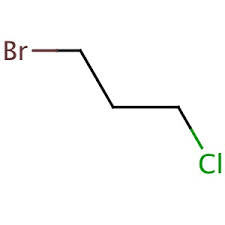
Tell us about your requirement

Price:
Quantity
Select Unit
- 50
- 100
- 200
- 250
- 500
- 1000+
Additional detail
Mobile number
Email

More Products in Aliphatic Bromide Category
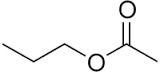
N-Propyl Acetate
Minimum Order Quantity : 1 Kilograms
EINECS No : 2036861
CAS No : 109604
Molecular Formula : C5H10O2
Smell : Other, Sweet fruity odor
Melting Point : 95C

Methyl - 3 - Oxopentanoate
Minimum Order Quantity : 1 Kilograms
EINECS No : 2100060
CAS No : 600226
Molecular Formula : C6H10O3
Smell : Other, Fruity, pleasant odor
Melting Point : 22C
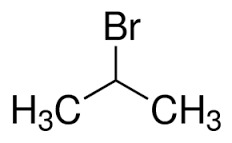
Isoporpyle Bromide
Minimum Order Quantity : 1 Kilograms
EINECS No : 2035267
CAS No : 107824
Molecular Formula : C3H7Br
Smell : Other, Characteristic, etherlike odour
Melting Point : 89C

2-Ethyl Hexyl Bromide
Minimum Order Quantity : 1 Kilograms
EINECS No : 2242715
CAS No : 4292528
Molecular Formula : C8H17Br
Smell : Other, Characteristic odor
Melting Point : 70C

Contact us

- Unit 1 :W-6, M.I.D.C., Chemical Zone, Ambernath (W), Ambernath - 421501, Maharashtra, India
- Phone : 08045479213
SONTARA ORGANO INDUSTRIES
GST : 27AAKFS5792F1ZP

- Mr. Mukesh B. Parekh (Partner)
- Mobile : 08045479213
- Send Inquiry
 Send Inquiry
 Send Inquiry
 Send SMS
SONTARA ORGANO INDUSTRIES
All Rights Reserved.(Terms of Use)
Developed and Managed by Infocom Network Private Limited.
Developed and Managed by Infocom Network Private Limited.


 English
 Spanish
 French
 German
 Italian
 Chinese (Simplified)
 Japanese
 Korean
 Arabic
 Portuguese