

 Send Inquiry
Allyl Bromide
MOQ : 1 Kilograms
Allyl Bromide Specification
- Molecular Formula
- C3H5Br
- Molecular Weight
- 120.98 g/mol
- Taste
- Not applicable (Not intended for consumption)
- Smell
- Intense, pungent, irritating
- Refractive Rate
- n20/D 1.439
- Structural Formula
- CH2=CHCH2Br
- HS Code
- 29036990
- Boiling point
- 71 C
- Classification
- Allyl Bromide is classified as an organic intermediate and halogenated compound.
- Organic Acid Types
- Not applicable.
- Inorganic Acid Types
- Not applicable.
- Grade
- Technical, Reagent
- Purity
- 98% min
- Application
- Used as an alkylating agent, intermediate in organic synthesis, and in production of pharmaceuticals and agrochemicals.
- Appearance
- Colourless to pale yellow liquid
- CAS No
- 106-95-6
- EINECS No
- 203-445-0
- Other Names
- 3-Bromoprop-1-ene; 1-Propene, 3-bromo-
- Usage
- Industrial; Laboratory reagents; Chemical synthesis
- Melting Point
- 119 C
- Density
- 1.398 Gram per cubic centimeter(g/cm3)
- Solubility
- Insoluble in water; soluble in alcohol, ether
- Raw Material
- Propylene, Hydrogen bromide
- Storage Conditions
- Store in a cool, dry, and well-ventilated area away from heat or sources of ignition.
- Manufacturing Method
- Produced via addition of hydrogen bromide to allyl alcohol or halogenation of propylene.
- Vapour Pressure
- 86 mmHg (20 C)
- Hazard Statement
- Toxic by inhalation, skin contact or ingestion; causes burns; lachrymator.
- Autoignition Temperature
- 410 C
- EC Number
- 203-445-0
- Shelf Life
- 24 months if properly stored.
- Flash Point
- -3 C (closed cup)
- Packaging
- Available in sealed glass bottles or drum containers as per requirement.
- Stability
- Stable under recommended storage conditions; decomposes on exposure to moisture.
Allyl Bromide Trade Information
- Minimum Order Quantity
- 1 Kilograms
- Supply Ability
- 100 Kilograms Per Month
- Delivery Time
- 7 Days
- Main Export Market(s)
- Asia, Australia, Central America, North America, South America, Eastern Europe, Western Europe, Middle East, Africa
Allyl Bromide About
| Name of Product | Allyl bromide |
| CAS No | 106-95-6 |
| Formula | C3H5Br |
| IUPAC Name | 3-bromoprop-1-ene |
| InChI | InChI=1S/C3H5Br/c1-2-3-4/h2H,1,3H2 |
| InChI Key | BHELZAPQIKSEDF-UHFFFAOYSA-N |
| Canonical SMILES | C=CCBr |
| EC Number | 203-446-6 |
| UN Number | 1099 |
| UNII | FXQ8X2F74Z |
| Wikipedia | Allyl bromide |
| Description | Colourless to pale yellow liquid |
| Purity by GC | Not less than 98.0% |
| Water | Not more than 0.2 % |
| Other name / synonyms | ALLYL BROMIDE |
| 3-Bromopropene | |
| 3-bromoprop-1-ene | |
| 1-Propene, 3-bromo- | |
| 106-95-6 | |
| 3-Bromopropylene | |
| 3-Bromo-1-propene | |
| Bromallylene | |
| 2-Propenyl bromide | |
| 1-Bromo-2-propene | |
| Propene, 3-bromo- | |
| NSC 7596 | |
| UNII-FXQ8X2F74Z | |
| CCRIS 9049 | |
| HSDB 622 | |
| BHELZAPQIKSEDF-UHFFFAOYSA-N | |
| EINECS 203-446-6 | |
| SBB059929 | |
| UN1099 | |
| UN 1099 | |
| BRN 0605308 | |
| AI3-52208 | |
| Bromoallylene | |
| allyl bromine | |
| allyl-bromide | |
| 3-bromo-propene | |
| prop-2-enylbromide | |
| 3-bromo-1-propen | |
| 3-bromo-prop-1-ene | |
| CH2=CHCH2Br | |
| DSSTox_CID_4442 | |
| SCHEMBL411 | |
| AC1L1PO9 | |
| ACMC-1BU57 | |
| DSSTox_RID_77398 | |
| FXQ8X2F74Z | |
| DSSTox_GSID_24442 | |
| A29585_ALDRICH | |
| KSC175I0L | |
| WLN: E2U1 | |
| 337528_ALDRICH | |
| Jsp000616 | |
| CHEMBL1429506 | |
| 05860_FLUKA | |
| CTK0H5405 | |
| NSC7596 | |
| MolPort-001-779-705 | |
| NSC-7596 | |
| STR00178 | |
| Tox21_200801 | |
| ANW-15464 | |
| BR1119 | |
| LS-415 | |
| AKOS000118756 | |
| AN-7018 | |
| MCULE-9486454833 | |
| RP19399 | |
| RTR-033966 | |
| TRA0000352 | |
| NCGC00091515-01 | |
| NCGC00091515-02 | |
| NCGC00258355-01 | |
| CAS-106-95-6 | |
| KB-74573 | |
| SC-25629 | |
| TR-033966 | |
| Allyl bromide [UN1099] [Flammable liquid] | |
| B0643 | |
| FT-0615127 | |
| ST51046196 | |
| Allyl bromide [UN1099] [Flammable liquid] | |
| 6122-EP2269992A1 | |
| 6122-EP2270003A1 | |
| 6122-EP2270011A1 | |
| 6122-EP2270018A1 | |
| 6122-EP2272848A1 | |
| 6122-EP2289868A1 | |
| 6122-EP2292595A1 | |
| 6122-EP2295425A1 | |
| 6122-EP2295429A1 | |
| 6122-EP2295437A1 | |
| 6122-EP2298775A1 | |
| 6122-EP2298780A1 | |
| 6122-EP2301911A1 | |
| 6122-EP2305689A1 | |
| 6122-EP2308812A2 | |
| 6122-EP2308841A2 | |
| 6122-EP2308851A1 | |
| 6122-EP2311802A1 | |
| 6122-EP2311803A1 | |
| 6122-EP2314586A1 | |
| 6122-EP2316836A1 | |
| InChI=1/C3H5Br/c1-2-3-4/h2H,1,3H | |
| 3B4-0911 | |
| I14-0231 |
Industrial Applications and Benefits
Allyl Bromide serves as a key intermediate in the manufacture of pharmaceuticals, agrochemicals, and specialized organic compounds. Its reactivity as an alkylating agent makes it valuable for chemical synthesis, facilitating the introduction of the allyl group into target molecules. The compound supports efficient processes in laboratory and industrial settings, promoting the advancement of chemical and pharmaceutical research.
Safe Storage and Handling Guidelines
Due to its high volatility (vapour pressure: 86 mmHg at 20 C) and toxic properties, Allyl Bromide should be stored in tightly sealed containers, away from heat or ignition sources, in a cool, well-ventilated area. The product is stable when kept dry but decomposes if exposed to moisture. Strict adherence to safety protocols minimizes risks associated with its use.
FAQs of Allyl Bromide:
Q: How should Allyl Bromide be safely stored and handled?
A: Allyl Bromide must be stored in a cool, dry, and well-ventilated area, away from sources of heat, sparks, or ignition. Use only sealed glass bottles or drums as provided. Personal protective equipment such as gloves, goggles, and respirators should be worn, as the compound is toxic and can cause burns upon contact.Q: What are the main industrial uses of Allyl Bromide?
A: Allyl Bromide is mainly utilized as an alkylating agent and as an intermediate in organic synthesis. It finds significant application in the manufacture of pharmaceuticals, agrochemicals, and various laboratory reagents due to its ability to introduce the allyl group into other molecules.Q: When is Allyl Bromide considered unstable or hazardous?
A: The compound decomposes upon exposure to moisture and becomes hazardous when not stored under recommended conditions. It is toxic by inhalation, ingestion, or skin contact and can cause burns and severe irritation, making proper storage and handling essential at all times.Q: Where does Allyl Bromide originate, and how is it produced?
A: Allyl Bromide is manufactured by the addition of hydrogen bromide to allyl alcohol or through the halogenation of propylene. These chemical processes yield a high-purity product suitable for industrial and laboratory applications, with India being a prominent exporter, manufacturer, and supplier.Q: What precautions should be taken during the transportation of Allyl Bromide?
A: Transportation requires sealed, appropriately labeled containerseither glass bottles or drumsto prevent leaks and limit exposure. Shipments should be kept cool and away from direct sunlight, following hazardous chemical transport regulations.Q: How long can Allyl Bromide be stored, and what are its stability factors?
A: When stored correctly in sealed containers under dry, cool, and well-ventilated conditions, Allyl Bromide remains stable and maintains its efficacy for up to 24 months. Exposure to moisture or air significantly reduces its shelf life and stability.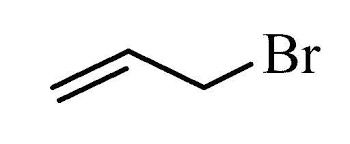
Tell us about your requirement

Price:
Quantity
Select Unit
- 50
- 100
- 200
- 250
- 500
- 1000+
Additional detail
Mobile number
Email

More Products in Aliphatic Bromide Category
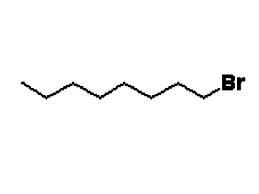
N- Octyl Bromide
Minimum Order Quantity : 1 Kilograms
Appearance : Clear Colorless to Pale Yellow Liquid
Smell : Other, Characteristic, Mild
Density : 1.077 Gram per cubic centimeter(g/cm3)
CAS No : 111831
Solubility : Insoluble in Water, Soluble in Organic Solvents
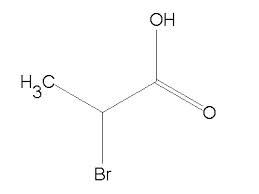
2-Bromopropane Acid
Minimum Order Quantity : 1 Kilograms
Appearance : Colorless to pale yellow liquid
Smell : Other, Pungent odor
Density : 1.564 Gram per cubic centimeter(g/cm3)
CAS No : 598721
Solubility : Soluble in water and organic solvents
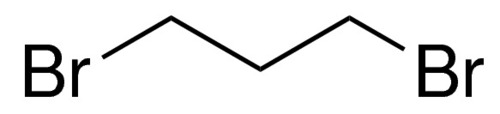
1,3-Dibrompropan .
Minimum Order Quantity : 1 Kilograms
Appearance : Colorless liquid
Smell : Other, Characteristic pungent odor
Density : 2.084 Gram per cubic centimeter(g/cm3)
CAS No : 109648
Solubility : Slightly soluble in water soluble in ethanol and ether
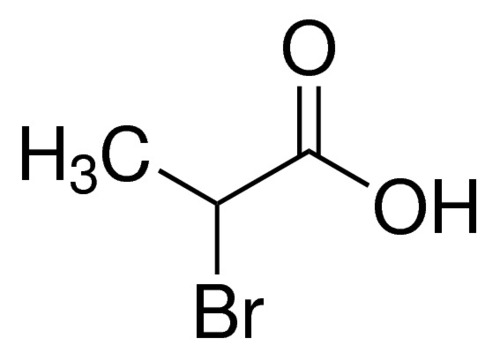
2-Bromopropionic acid
Minimum Order Quantity : 1 Kilograms
Appearance : White crystalline powder
Smell : Other, Characteristic acidic smell
Density : 1.8 Gram per cubic centimeter(g/cm3)
CAS No : 79083
Solubility : Soluble in water and organic solvents

Contact us

- Unit 1 :W-6, M.I.D.C., Chemical Zone, Ambernath (W), Ambernath - 421501, Maharashtra, India
- Phone : 08045479213
SONTARA ORGANO INDUSTRIES
GST : 27AAKFS5792F1ZP

- Mr. Mukesh B. Parekh (Partner)
- Mobile : 08045479213
- Send Inquiry
 Send Inquiry
 Send Inquiry
 Send SMS
SONTARA ORGANO INDUSTRIES
All Rights Reserved.(Terms of Use)
Developed and Managed by Infocom Network Private Limited.
Developed and Managed by Infocom Network Private Limited.


 English
 Spanish
 French
 German
 Italian
 Chinese (Simplified)
 Japanese
 Korean
 Arabic
 Portuguese