

 Send Inquiry
Methyl Acetate
Methyl Acetate Specification
- Molecular Formula
- C3H6O2
- Taste
- Sweet, fruity
- HS Code
- 2915.39.90
- Smell
- Characteristic, pleasant, fruity odor
- Refractive Rate
- 1.361 (20°C)
- Structural Formula
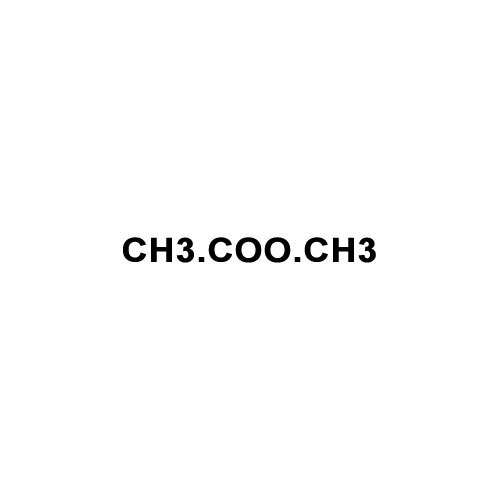
- CH3COOCH3
- Molecular Weight
- 74.08 g/mol
- Boiling point
- 56.9°C
- Grade
- Industrial Grade
- Purity
- 99% min
- Application
- Solvent, Industrial, Paints & Coatings, Adhesives, Extraction, Pharmaceuticals
- Appearance
- Clear, colorless liquid
- CAS No
- 79-20-9
- EINECS No
- 201-185-2
- Other Names
- Acetic acid methyl ester, Methyl ethanoate
- Usage
- Used as a solvent in paints, adhesives, coatings, and chemical synthesis
- Melting Point
- -98°C
- Density
- 0.93 Gram per cubic centimeter(g/cm3)
- Solubility
- Moderately soluble in water, miscible with most organic solvents
- Raw Material
- Acetic Acid, Methanol
- Storage Conditions
- Store in cool, well-ventilated area away from ignition sources
- Stability
- Stable under recommended storage conditions
- Packaging
- Drum, ISO Tank, IBC
- UN Number
- 1231
- Evaporation Rate
- Very fast
- Flash Point
- -10C (Closed cup)
- Auto-ignition Temperature
- 454C
- Hazard Class
- 3 (Flammable Liquid)
- Vapor Pressure
- 173 mm Hg @ 20C
- Shelf Life
- 2 years in unopened packaging
Methyl Acetate Trade Information
- Supply Ability
- 100 Per Month
- Delivery Time
- 7 Days
- Main Export Market(s)
- Asia, Australia, Central America, North America, South America, Eastern Europe, Western Europe, Middle East, Africa
About Methyl Acetate
With a zeal to provide huge satisfaction to the clients through our products, we are committed in providing excellent quality Methyl Acetate. The offered chemical is generally used in paints, glues and nail polish removal as a volatile toxic solvent. It is formulated under the supervision of our ingenious professionals using quality-tested chemical compounds in an appropriate manner. Also, tested on certain parameters of quality, this Methyl Acetate can be availed in different air-sealed packaging options at the highly competitive rates from us.
Features:
-
Exact pH value
-
Accurate composition and purity
-
Longer Shelf life
-
Stable chemical and physical properties
Specifications:
|
Sr No |
ACTIVITY |
|
A |
General information : |
|
1 |
Structure : CH3.COO.CH3 |
|
2 |
Molecular formula : C3H6O2 |
|
3 |
Molecular weight : 74 |
|
4 |
Chemical name : Methyl acetate |
|
5 |
Density at 25oc : 0.932 gm/ml |
|
6 |
Boiling point : 57.5oc |
|
7 |
CAS no. : 79-20-9 |
|
|
|
|
B |
Specifications : |
|
1 |
Description : Clear, colourless liquid |
|
2 |
Acidity : Not more than 0.5 % |
|
3 |
Moisture (KF) : Not more than 0.5 % |
|
4 |
Purity by GC : Not less than 99.0% |
High-Performance Industrial Solvent
Methyl acetate offers exceptional solvency, making it a preferred choice in the manufacturing and formulation of paints, coatings, adhesives, and pharmaceuticals. Its rapid evaporation rate makes it highly effective for fast-drying applications, while its compatibility with a range of organic substances broadens its utility across various industrial processes.
Safe Handling and Storage
As a flammable liquid (Hazard Class 3, UN 1231), methyl acetate requires strict safety measures. Store in a cool, well-ventilated area, away from heat, sparks, and open flames. With stable characteristics under recommended conditions and a shelf life of two years in unopened packaging, proper storage ensures long-term usability and safety.
FAQs of Methyl Acetate:
Q: How should methyl acetate be stored for maximum safety and shelf life?
A: Methyl acetate must be stored in tightly sealed, unopened containers in a cool, well-ventilated location, away from ignition sources and direct sunlight. Following these conditions ensures product stability and maintains its two-year shelf life.Q: What are the common applications of methyl acetate in industry?
A: Methyl acetate is used chiefly as a solvent in paints, coatings, adhesives, pharmaceutical manufacturing, and extraction processes. Its fast evaporation and compatibility with organic materials enhance productivity and product quality in these applications.Q: When can methyl acetate become hazardous during handling or storage?
A: Methyl acetate is classified as a flammable liquid (Hazard Class 3) with a flash point of -10C. It becomes hazardous when exposed to open flames, sparks, or high temperatures. Always handle with proper safety protocols and store away from potential ignition sources.Q: Where is methyl acetate typically supplied from and in what packaging forms?
A: Methyl acetate is manufactured and exported from India, commonly packaged in drums, ISO tanks, and IBC containers to facilitate safe storage and shipping in bulk quantities.Q: What benefits does methyl acetate offer as a solvent compared to alternatives?
A: Methyl acetates high purity (99% min), rapid evaporation, and excellent solvency enable efficient, streak-free application and quick drying times, making it especially beneficial for fast-paced industrial processes and high-quality finishes.Q: How is methyl acetate produced?
A: Methyl acetate is synthesized through the esterification of acetic acid with methanol, resulting in a carboxylic acid ester with the molecular formula C3H6O2. This process produces a clear, colorless liquid suitable for industrial usage.Q: What is the recommended process for disposing of methyl acetate waste?
A: Handle methyl acetate waste as hazardous chemical waste in accordance with local environmental regulations. It should be collected in properly labeled containers and disposed of through licensed chemical waste disposal services to prevent environmental contamination.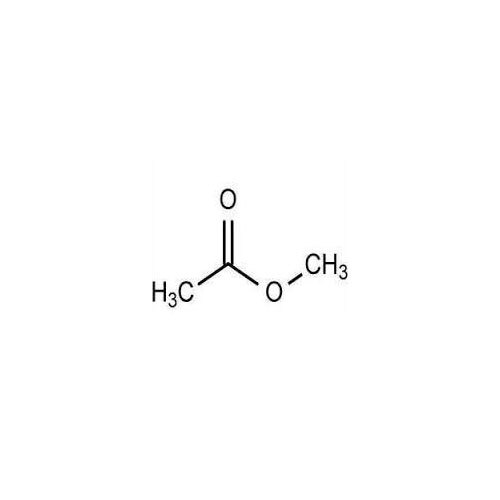
Tell us about your requirement

Price:
Quantity
Select Unit
- 50
- 100
- 200
- 250
- 500
- 1000+
Additional detail
Mobile number
Email

More Products in Aliphatic Esters Category
ETHYL OLEATE
Appearance : Clear, pale yellow oily liquid
HS Code : 2916
Molecular Weight : 310.51 g/mol
Boiling point : 216218C (15 mmHg)
CAS No : 111626
Smell : Other, Odorless or faint fatty odor
Ethyl Chloroacetate
Appearance : Clear, colorless to pale yellow liquid
HS Code : 29154000
Molecular Weight : 122.55 g/mol
Boiling point : 143145C
CAS No : 105395
Smell : Other, Pungent, fruity odor
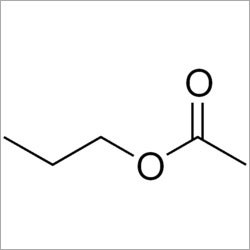
N Propyl Acetate
Appearance : Colorless liquid
HS Code : 291539
Molecular Weight : 102.13 g/mol
Boiling point : 102C
CAS No : 109604
Smell : Other, Fruity odor
ETHYL PALMITATE
Appearance : Colorless to pale yellow oily liquid
HS Code : 2915 70 90
Molecular Weight : 284.48 g/mol
Boiling point : 215C (at 20 mmHg)
CAS No : 628977
Smell : Other, Faint, characteristic

Contact us

- Unit 1 :W-6, M.I.D.C., Chemical Zone, Ambernath (W), Ambernath - 421501, Maharashtra, India
- Phone : 08045479213
SONTARA ORGANO INDUSTRIES
GST : 27AAKFS5792F1ZP

- Mr. Mukesh B. Parekh (Partner)
- Mobile : 08045479213
- Send Inquiry
 Send Inquiry

 Send Inquiry
 Send SMS
 Call Me Free

SONTARA ORGANO INDUSTRIES
All Rights Reserved.(Terms of Use)
Developed and Managed by Infocom Network Private Limited.
Developed and Managed by Infocom Network Private Limited.


 English
 Spanish
 French
 German
 Italian
 Chinese (Simplified)
 Japanese
 Korean
 Arabic
 Portuguese
