

 Send Inquiry
N- Butyl Bromide
MOQ : 1 Kilograms
N- Butyl Bromide Specification
- Molecular Weight
- 137.02 g/mol
- Boiling point
- 101.5 °C
- Molecular Formula
- C4H9Br
- Refractive Rate
- n20/D 1.439
- HS Code
- 29035990
- Smell
- Sweet, Ether-like Odor
- Structural Formula
- CH3(CH2)3Br
- Classification
- Alkyl Halide
- Grade
- Industrial Grade
- Purity
- 99%
- Application
- Pharmaceutical Intermediates, Organic Synthesis, Solvent
- Appearance
- Clear, Colorless Liquid
- CAS No
- 109-65-9
- EINECS No
- 203-689-8
- Other Names
- 1-Bromobutane
- Usage
- Used as alkylating agent, flavor intermediate, laboratory reagent
- Melting Point
- -112 °C
- Density
- 1.276 Gram per cubic centimeter(g/cm3)
- Solubility
- Immiscible with water; soluble in ethanol and ether
- Raw Material
- 1-Butanol, Hydrobromic Acid
- Synonyms
- Butyl Bromide, n-Butylbromide
- Shelf Life
- 24 Months
- Packaging
- Available in 250kg drum
- Flash Point
- 28 C (closed cup)
- UN Number
- 1126
- Vapour Pressure
- 50 mmHg (20C)
- Hazard Class
- Class 3 (Flammable Liquid)
- Storage Conditions
- Store in cool, ventilated area; keep container tightly closed
- Stability
- Stable under normal conditions
- Auto-ignition Temperature
- 230 C
N- Butyl Bromide Trade Information
- Minimum Order Quantity
- 1 Kilograms
- Supply Ability
- 100 Kilograms Per Month
- Delivery Time
- 7 Days
- Main Export Market(s)
- Asia, Australia, Central America, North America, South America, Eastern Europe, Western Europe, Middle East, Africa
N- Butyl Bromide About
| Name of Product | N-Butyl Bromide |
| CAS No | 109-65-9 |
| Formula | CH3(CH2)3Br |
| IUPAC Name | 1-bromobutane |
| InChI | InChI=1S/C4H9Br/c1-2-3-4-5/h2-4H2,1H3 |
| InChI Key | MPPPKRYCTPRNTB-UHFFFAOYSA-N |
| Canonical SMILES | CCCCBr |
| CAS | 109-65-9 |
| EC Number | 203-691-9 |
| UN Number | 1126 |
| UNII | SAV6Y78U3D |
| Wikipedia | 1-Bromobutane |
| Description | Clear, Colourless to pale yellow liquid |
| Water | Not more than 0.1 % |
| Purity by GC | Not less than 98.50% |
| Acidity | Not more than 0.1 % |
| Other name / synonyms | 1-Bromobutane |
| Butyl bromide | |
| N-BUTYL BROMIDE | |
| 109-65-9 | |
| Bromobutane | |
| Butane, 1-bromo- | |
| 1-Butyl bromide | |
| n-Butylbromide | |
| 1-BROMO-BUTANE | |
| CCRIS 831 | |
| HSDB 2195 | |
| MPPPKRYCTPRNTB-UHFFFAOYSA-N | |
| EINECS 203-691-9 | |
| SBB059930 | |
| UN1126 | |
| AI3-15308 | |
| butylbromide | |
| 26602-89-1 | |
| BBU | |
| l-bromobutane | |
| bromo butane | |
| n-butyl bromine | |
| 1-butylbromide | |
| 4-bromobutane | |
| 1-bromanylbutane | |
| 1 -bromobutane | |
| 1- bromobutane | |
| 1-bromo butane | |
| 4-bromo-butane | |
| Butane, bromo- | |
| 1-bromo-n-butane | |
| PubChem3752 | |
| n-C4H9Br | |
| ACMC-1CDG0 | |
| UNII-SAV6Y78U3D | |
| AC1L1Q1F | |
| AC1Q2V5Z | |
| SCHEMBL8141 | |
| SAV6Y78U3D | |
| KSC174K7T | |
| CHEMBL160949 | |
| 08953_FLUKA | |
| 19681_FLUKA | |
| B59497_SIAL | |
| CTK0H4579 | |
| MolPort-000-875-340 | |
| LABOTEST-BB LTBB001154 | |
| ANW-16076 | |
| STL282740 | |
| ZINC02041078 | |
| AKOS000118760 | |
| AS03109 | |
| JC10149 | |
| MCULE-3390217131 | |
| RP20324 | |
| RTR-002071 | |
| TRA0025824 | |
| UN 1126 | |
| AN-22566 | |
| CJ-32486 | |
| I842 | |
| KB-64992 | |
| LS-45622 | |
| SC-00326 | |
| DB-050412 | |
| TL8000306 | |
| TR-002071 | |
| B0560 | |
| FT-0607523 | |
| FT-0623351 | |
| ST51046197 | |
| 1-Bromobutane [UN1126] [Flammable liquid] | |
| 1-Bromobutane [UN1126] [Flammable liquid] | |
| 119345-EP2289965A1 | |
| 119345-EP2298828A1 | |
| A802070 | |
| 3B4-0633 | |
| InChI=1/C4H9Br/c1-2-3-4-5/h2-4H2,1H | |
| S14-1483 | |
| 3B1-006155 |
Applications and Industrial Value
N-Butyl Bromide serves as an essential alkylating agent and flavor intermediate in the pharmaceutical industry. Its utility extends to organic synthesis and laboratory research, making it a valuable compound for chemical manufacturers and researchers. The products high purity ensures reliability during critical reactions, particularly when used as a solvent or in specialty chemical processes.
Safe Handling and Storage Requirements
Due to its flammable nature, N-Butyl Bromide must be stored in a cool, ventilated area with containers tightly sealed. Adhering to safety measures mitigates risk and preserves product integrity. The chemical is classified under hazard class 3 (UN 1126), and industry professionals should consult standard safety protocols for safe transportation and handling to avoid ignition or exposure.
FAQs of N- Butyl Bromide:
Q: How should N-Butyl Bromide be stored to ensure its quality and safety?
A: N-Butyl Bromide should be stored in a cool, well-ventilated area with containers tightly closed. Keeping it away from ignition sources and incompatible materials preserves stability and reduces fire risks.Q: What industrial applications does N-Butyl Bromide support?
A: N-Butyl Bromide is predominantly used as an alkylating agent in organic synthesis, a pharmaceutical intermediate, a flavor compound, and as a laboratory reagent. Its versatility makes it valuable in chemical and pharmaceutical manufacturing.Q: When is it recommended to use N-Butyl Bromide in synthesis processes?
A: N-Butyl Bromide is ideal for use when high-purity alkyl halides are needed, such as in pharmaceutical synthesis, research experiments, flavor creation, and specialty chemical manufacturing.Q: Where can N-Butyl Bromide be obtained in industrial quantities?
A: N-Butyl Bromide is available from exporters, manufacturers, and suppliers in India, typically packaged in 250kg drums suitable for commercial and research-scale requirements.Q: What is the benefit of using N-Butyl Bromide in organic synthesis?
A: Its high purity and reactive nature as an alkylating agent allow for efficient introduction of butyl groups, facilitating the creation of diverse organic compounds with accuracy and consistency.Q: How long is the shelf life of N-Butyl Bromide, and what factors influence its longevity?
A: N-Butyl Bromide has a shelf life of 24 months when stored properly in sealed containers away from direct sunlight, heat, and moisture, which helps maintain its quality and efficacy.
Tell us about your requirement

Price:
Quantity
Select Unit
- 50
- 100
- 200
- 250
- 500
- 1000+
Additional detail
Mobile number
Email

More Products in Aliphatic Bromide Category
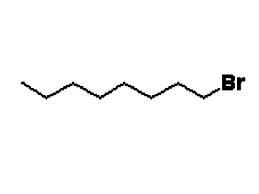
N- Octyl Bromide
Minimum Order Quantity : 1 Kilograms
Purity : 98%
Molecular Formula : C8H17Br
Usage : Chemical Synthesis, Research, Fine Chemicals, Specialty Chemicals
Boiling point : 201203 C
Raw Material : nOctanol, Bromine
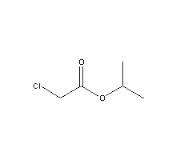
Isoporpyle Chloro Acetate
Minimum Order Quantity : 1 Kilograms
Purity : 99%
Molecular Formula : C5H9ClO2
Usage : Intermediate for organic synthesis
Boiling point : 164166C
Raw Material : Isopropanol, Chloroacetic acid
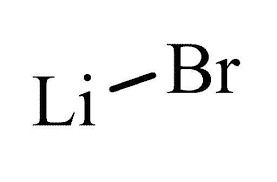
Lithium Bromide 50-55% Sol
Minimum Order Quantity : 1 Kilograms
Purity : 5055%
Molecular Formula : LiBr
Usage : Refrigerant Absorbent, Desiccant, Heat Transfer Medium
Boiling point : ~126.5 C (solution)
Raw Material : Lithium Carbonate, Hydrobromic Acid

N Butyl Bromide
Minimum Order Quantity : 1 Kilograms
Purity : 99%
Molecular Formula : C4H9Br
Usage : Used as alkylating agent, in synthesis of pharmaceuticals and agrochemicals
Boiling point : 101103C
Raw Material : nButanol, Hydrobromic acid

Contact us

- Unit 1 :W-6, M.I.D.C., Chemical Zone, Ambernath (W), Ambernath - 421501, Maharashtra, India
- Phone : 08045479213
SONTARA ORGANO INDUSTRIES
GST : 27AAKFS5792F1ZP

- Mr. Mukesh B. Parekh (Partner)
- Mobile : 08045479213
- Send Inquiry
 Send Inquiry
 Send Inquiry
 Send SMS
 Call Me Free
SONTARA ORGANO INDUSTRIES
All Rights Reserved.(Terms of Use)
Developed and Managed by Infocom Network Private Limited.
Developed and Managed by Infocom Network Private Limited.


 English
 Spanish
 French
 German
 Italian
 Chinese (Simplified)
 Japanese
 Korean
 Arabic
 Portuguese