

 Send Inquiry
Lauryl Bromide
MOQ : 1 Kilograms
Lauryl Bromide Specification
- Molecular Weight
- 249.24 g/mol
- Refractive Rate
- nD20: 1.457
- HS Code
- 29035920
- Smell
- Characteristic, mild
- Molecular Formula
- C12H25Br
- Structural Formula
- CH3(CH2)10CH2Br
- Boiling point
- 278°C
- Grade
- Technical/Analytical
- Purity
- 99% min
- Application
- Pharmaceuticals, organic synthesis, chemical intermediate
- Appearance
- Colorless to pale yellow liquid
- CAS No
- 112-71-0
- EINECS No
- 203-992-7
- Other Names
- 1-Bromododecane; Dodecyl bromide
- Usage
- Organic synthesis, surfactant manufacture, laboratory reagent
- Melting Point
- -6°C
- Density
- 1.115 Gram per cubic centimeter(g/cm3)
- Solubility
- Insoluble in water; soluble in organic solvents
- Raw Material
- Lauryl alcohol
- Vapor Pressure
- <0.01 mm Hg @ 25C
- Flash Point
- >100C
- Stability
- Stable under normal conditions
- Auto-ignition Temperature
- >200C
- Synonyms
- Dodecyl bromide, 1-Bromododecane
- Physical State
- Liquid
- Packaging Type
- Bottles, drums
- Storage Condition
- Store in a cool, dry, well-ventilated area
- Transport Information
- UN 2706, Class 6.1
- Hazard Statements
- May cause irritation, use with adequate ventilation
Lauryl Bromide Trade Information
- Minimum Order Quantity
- 1 Kilograms
- Supply Ability
- 100 Kilograms Per Month
- Delivery Time
- 7 Days
- Main Export Market(s)
- Asia, Australia, Central America, North America, South America, Eastern Europe, Western Europe, Middle East, Africa
Lauryl Bromide About
| Name of Product | Lauryl bromide |
| CAS No | 143-15-7 |
| Formula | C12H25Br |
| UPAC Name | 1-bromododecane |
| InChI | InChI=1S/C12H25Br/c1-2-3-4-5-6-7-8-9-10-11-12-13/h2-12H2,1H3 |
| InChI Key | PBLNBZIONSLZBU-UHFFFAOYSA-N |
| Canonical SMILES | CCCCCCCCCCCCBr |
| CAS | 143-15-7 |
| EC Number | 205-587-9 |
| UNII | 90T93TX09D |
| Purity (by GC) | Not less than.96.0 % |
| Moisture | NMT 0.5% |
| Free Acidity as | NMT 0.5% |
| Other name / synonyms | 1-Bromododecane |
| 143-15-7 | |
| Dodecyl bromide | |
| Lauryl bromide | |
| n-Dodecyl bromide | |
| Dodecane, 1-bromo- | |
| bromododecane | |
| 1-bromo-dodecane | |
| 1-BROMO-N-DODECANE | |
| PBLNBZIONSLZBU-UHFFFAOYSA-N | |
| SBB059941 | |
| dodecylbromide | |
| laurylbromide | |
| n-dodecylbromide | |
| 1-bromo dodecane | |
| 1-dodecyl-bromide | |
| PubChem3768 | |
| ACMC-209cpp | |
| AC1L1RYD | |
| AC1Q27VK | |
| AC1Q2W0E | |
| DSSTox_CID_24395 | |
| DSSTox_RID_80196 | |
| DSSTox_GSID_44395 | |
| SCHEMBL33679 | |
| B65551_ALDRICH | |
| KSC179C4P | |
| UNII-90T93TX09D | |
| CHEMBL3184907 | |
| 16970_FLUKA | |
| 17743_FLUKA | |
| CTK0H9147 | |
| NSC6786 | |
| MolPort-001-779-706 | |
| 90T93TX09D | |
| LABOTEST-BB LTBB001166 | |
| NSC 6786 | |
| NSC-6786 | |
| EINECS 205-587-9 | |
| Tox21_302046 | |
| ANW-20747 | |
| AR-1C2033 | |
| BR1063 | |
| STL268855 | |
| AKOS009031585 | |
| AS03239 | |
| MCULE-2442495006 | |
| NE10015 | |
| RP28849 | |
| RTR-005509 | |
| TRA0008845 | |
| NCGC00255853-01 | |
| AK162994 | |
| AN-43936 | |
| BC676910 | |
| CAS-143-15-7 | |
| KB-11798 | |
| SC-01076 | |
| AI3-02166 | |
| DB-050400 | |
| TR-005509 | |
| B0587 | |
| FT-0607527 | |
| ST24037904 | |
| ST51046208 | |
| EN300-19409 | |
| 3B4-0621 | |
| S14-1423 |
Applications in Organic Synthesis
Lauryl Bromide is an essential reagent in organic synthesis, frequently used in the manufacture of surfactants and preparation of pharmaceutical intermediates. Its high purity and stability make it an excellent choice for both laboratory research and industrial-scale chemical production, ensuring reproducible and reliable outcomes in diverse chemical processes.
Safe Storage and Handling
Proper storage of Lauryl Bromide involves keeping it in a cool, dry, and well-ventilated location. It is typically distributed in secure bottles or drums, reducing the risk of accidental exposure. Users should employ suitable protective equipment and ventilation to avoid irritation caused by vapors, as indicated by the materials hazard statements.
FAQs of Lauryl Bromide:
Q: How should Lauryl Bromide be safely stored?
A: Lauryl Bromide must be kept in a cool, dry, well-ventilated area, preferably in tightly sealed bottles or drums, to maintain its stability and prevent any unwanted reactions.Q: What is Lauryl Bromide commonly used for in industry?
A: Lauryl Bromide is primarily utilized as an organic synthesis reagent, intermediate in pharmaceuticals, surfactant manufacture, and as a laboratory reagent due to its high purity and consistent chemical properties.Q: When is it beneficial to use Lauryl Bromide over other alkyl halides?
A: Lauryl Bromide proves advantageous when a long-chain brominated alkane is required, offering reliability in pharmaceutical synthesis and surfactant production, particularly where water insolubility and specific reactivity are necessary.Q: Where can Lauryl Bromide be procured?
A: Lauryl Bromide is manufactured, exported, and supplied by various chemical companies in India, typically available in bottles and drums suitable for laboratory or industrial applications.Q: What precautions should be taken when handling Lauryl Bromide?
A: Adequate ventilation is necessary during use to minimize inhalation of vapors, as the compound may cause irritation. Protective gloves, goggles, and lab coats are recommended to ensure safe handling.Q: How does the manufacturing process of Lauryl Bromide begin?
A: Lauryl Bromide is synthesized using lauryl alcohol as the raw material, undergoing bromination and purification to achieve technical and analytical grade product with a minimum 99% purity.Q: What are the benefits of using Lauryl Bromide in synthesis?
A: Its high purity, stable chemical nature, and solubility in organic solvents make Lauryl Bromide a sought-after reagent for efficient, reliable organic and pharmaceutical synthesis, yielding high-quality end products.
Tell us about your requirement

Price:
Quantity
Select Unit
- 50
- 100
- 200
- 250
- 500
- 1000+
Additional detail
Mobile number
Email

More Products in Aliphatic Bromide Category
Isopropyl Chloro Acetate
Minimum Order Quantity : 1 Kilograms
Structural Formula : ClCH2COOCH(CH3)2
Application : Pharmaceutical Intermediates, Organic Synthesis, Agrochemicals
Usage : Used as an intermediate in the manufacture of pharmaceuticals and agrochemicals
Smell : Other, Pungent, Esterlike
Molecular Formula : C5H9ClO2

N Pentyl Bromide
Minimum Order Quantity : 1 Kilograms
Structural Formula : CH3(CH2)4Br
Application : Chemical Intermediate, Pharmaceutical Synthesis
Usage : Laboratory reagent, Organic synthesis
Smell : Other, Characteristic, pungent
Molecular Formula : C5H11Br
1,2,3 Tribromopropane
Minimum Order Quantity : 1 Kilograms
Structural Formula : CH2BrCHBrCH2Br
Application : Organic synthesis; Solvent; Laboratory reagent; Pharmaceuticals intermediate
Usage : Used in chemical research, synthesis of organic compounds, production of flame retardants and pharmaceuticals
Smell : Other, Mild sweet odor
Molecular Formula : C3H5Br3
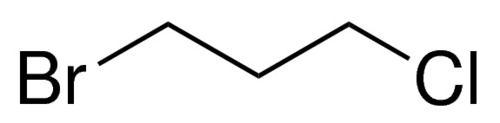
1 Bromo 3 Chloro Propane
Minimum Order Quantity : 1 Kilograms
Structural Formula : BrCH2CH2CH2Cl
Application : Pharmaceutical and chemical synthesis, organic intermediate
Usage : Used as an intermediate for organic synthesis
Smell : Other, Characteristic, pungent odor
Molecular Formula : C3H6BrCl

Contact us

- Unit 1 :W-6, M.I.D.C., Chemical Zone, Ambernath (W), Ambernath - 421501, Maharashtra, India
- Phone : 08045479213
SONTARA ORGANO INDUSTRIES
GST : 27AAKFS5792F1ZP

- Mr. Mukesh B. Parekh (Partner)
- Mobile : 08045479213
- Send Inquiry
 Send Inquiry
 Send Inquiry
 Send SMS
 Call Me Free
SONTARA ORGANO INDUSTRIES
All Rights Reserved.(Terms of Use)
Developed and Managed by Infocom Network Private Limited.
Developed and Managed by Infocom Network Private Limited.


 English
 Spanish
 French
 German
 Italian
 Chinese (Simplified)
 Japanese
 Korean
 Arabic
 Portuguese